Mastering the High Bridge: How to Shoot Over Obstacle Balls Like a Pro
The "Achilles Heel" of Pool
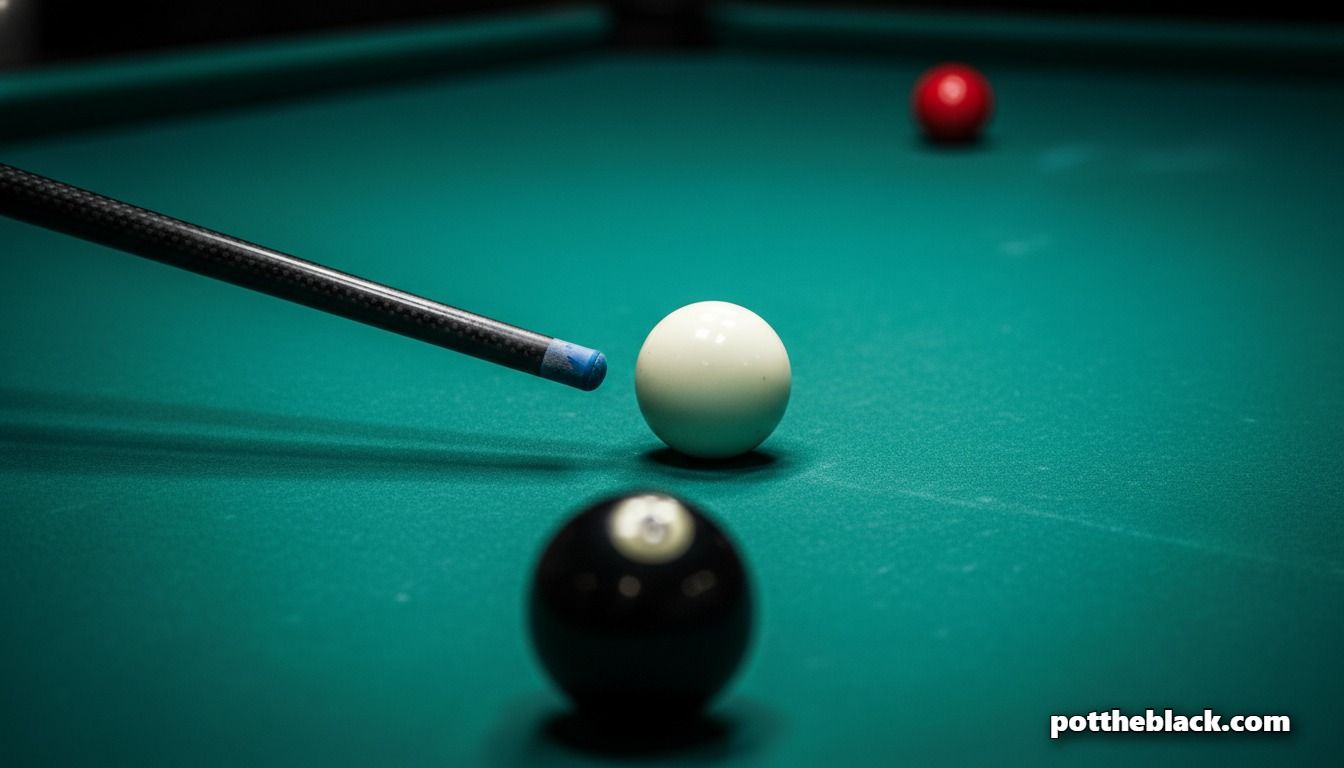
If you can’t shoot over a ball, you’re giving away frames. It’s as simple as that. For most players, being "Chinese snookered"—hampered by an obstacle ball—is the ultimate Achilles heel.
You see it all the time at the local RSA: a player gets jacked up, panics, and makes a total dog's breakfast of a simple pot. They either wobble the cue, miss-hit the ball, or commit the dreaded "double hit" foul where the tip stays on the cue ball too long.
My goal today is to help you transform these intimidating moments into high-percentage shots. We’re going to use professional techniques to ensure you’re clearing obstacles with the same technical precision you use for a standard shot.
The Pre-Shot Routine: Alignment First
The biggest mistake I see is the "Commando roll." This is when a player gets frustrated by the obstacle, rushes straight onto the table, and tries to find their aim while they’re already hunched over. If you're moving your cue around while you're jacking up, you've already lost.You must stand behind the shot to find your line of aim before you ever touch the cloth. Lock that line in while standing, then step into the shot.
Rob’s Pro Tip: Once you’ve set your line of aim while standing, stay on that exact line as you transition to the table. Even as you elevate the cue to clear the obstacle, the cue must remain on that original path. Slide the cue back in your hand if needed to clear the ball, but do not move it off-line.
Building a Rock-Solid High Bridge
If your bridge hand is shaky, you’ll never deliver a straight stroke. To build a stable high bridge, you need a "tripod" or "Inverted V" placement:
- The Footprint: Spread your pinky, ring, and middle fingers wide. A larger footprint on the cloth is far more stable than a narrow one.
- Dig In: Don't just rest your hand; dig your fingertips firmly into the cloth. This tension creates a solid base of support that won't shift.
- The Bony "V": Press your thumb firmly against your index finger to form a deep "V" guide. Make sure the cue rests on the bony part of the thumb and finger rather than the flesh. Fleshy contact creates inconsistent resistance; a bony guide is stiffer and more reliable.
Stability Checkpoints:
- Fingers spread for a wide footprint.
- Fingertips pressed/dug into the cloth.
- Knuckles raised high, but the heel of the hand stays as low as possible for stability.
- Thumb held tightly to ensure a stiff, bony "V."
Delivery Tactics: Adjusting Your Grip and Stroke
When you "jack up" the cue, your arm mechanics change. You can't use a standard full-blooded swing here.
- Choking Up: Move your grip hand forward on the cue—about 6 to 8 inches further than usual. This naturally shortens your stroke and improves control.
- Pendulum Adjustment: Instead of a horizontal swing, use a stroke where the hand moves more up than forward. This limits follow-through, which is essential for accuracy and avoiding fouls.
- The "Poking" Stroke: For most shots, use a short bridge and a short, smooth "poking" motion. Don't get jabby; just deliver the tip through the ball with a controlled pause.
- The Dart Stroke: In vertical "tight spots" where the butt of the cue is forced extremely high, hold the cue between your arm and body like you're throwing a dart. This keeps the movement contained and vertical.
How to Avoid the Double Hit Foul
A double hit happens when the cue ball hits the object ball and "bounces" back into your tip while it's still moving forward. This is a common foul when the gap between balls is small. Here are the pro ways to stay legal:
- Go Vertical: If the gap is tiny, use a nearly vertical cue angle. This allows the tip to move away from the ball's path instantly.
- Tighten the Grip: Tightening both your grip and bridge hands limits forward travel, stopping the cue in its tracks.
- The Rail-Stop Method: If you're near a rail, slide your grip hand forward so your knuckles strike the rail immediately after contact. It might sting, but it stops the cue instantly.
- The Jump Cue Trick: Use a jump cue for these shots. Because it is lightweight, it's easier to control and less likely to drive through the ball for a second hit.
- The "Light Cue" Logic: In extreme cases, pros might use a paper towel tube or balsa wood extension. Because the "cue" is lighter than the ball, it will actually bounce back from the cue ball upon contact.
- The Forte or "Whip" Shot: Use side spin to allow the tip end of the shaft to flex away from the cue ball as it clears.
- Inside Spin vs. Outside Spin: Always prefer Inside Spin. Visually, with inside spin, the cue ball deflects away from the tip path. With Outside Spin, the tip follows the ball into the foul zone, making a double hit almost certain.
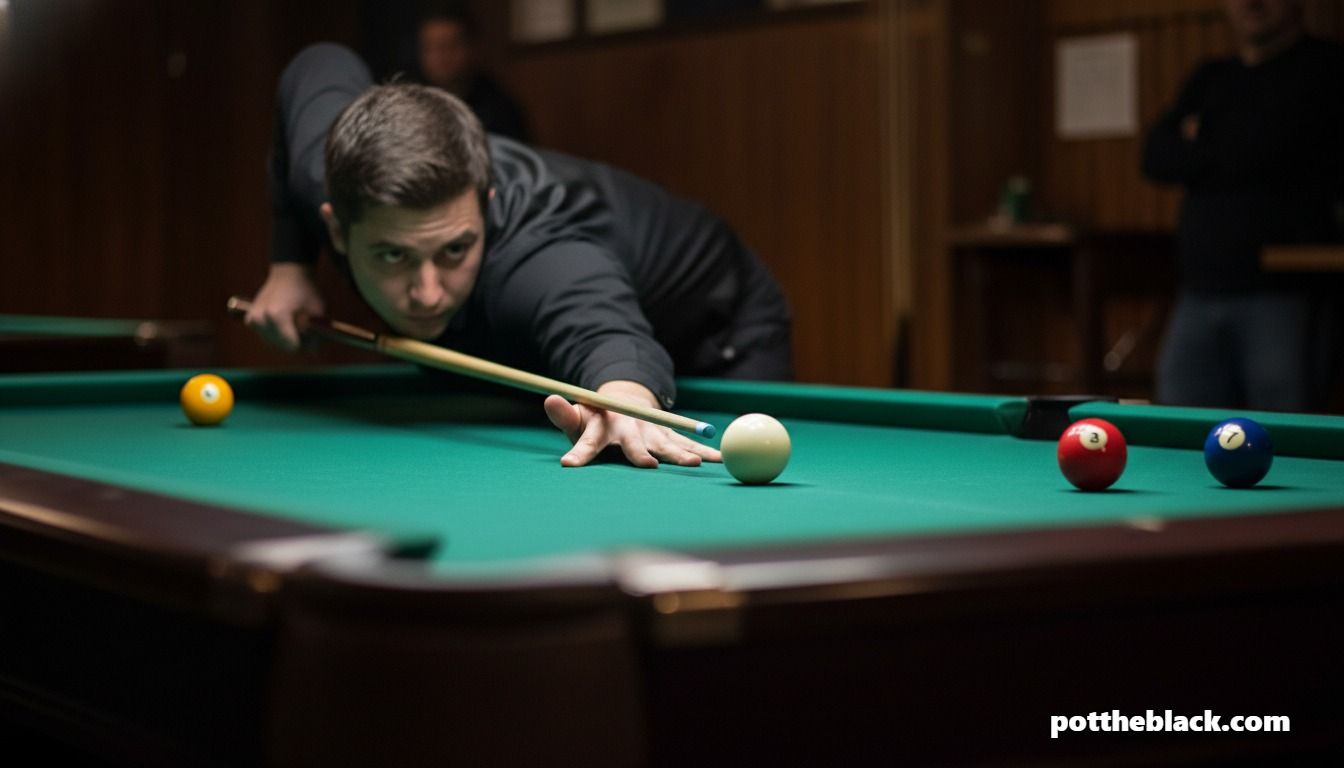
Not every shot is easy like this where you have the space to lay a solid platform of bridge and position.
Using Mechanical Bridges (Spiders and Swan-necks)
Sometimes your hand just won't cut it. When using the "rest," remember the "No Liberties" rule: these implements are the replacement for your bridge hand. If they move, the shot is dead.
- The Spider: Use this to bridge over one or two balls. Don't try to "manipulate" it; just place it firmly and keep it still.
- The Swan-neck: Use this when you need to get lower than an extended spider allows over a cluster.
- Flexible Shaft Danger: Barry Stark warns that if you rest your fingers on the shaft of a spider to gain extra height, be wary of "flexible shaft" movement. If the shaft flexes, you risk touching other balls or losing your line.
- The Stacked Bridge: For custom height, place a standard rest on top of a spider. Hold both shafts together firmly.
The Object Ball Jump (Sharivari Method): This is a specific "bonus shot." By elevating and hitting the cue ball with high speed, the cue ball jumps, hits the object ball, and transfers that "jump" energy. The object ball then hops over the obstacle ball and into the pocket. It requires a mixture of high speed and precise elevation—too much, and the cue ball will fly off the table.8. The 3-Step Execution Plan
- Visualize the Path: Imagine the exact line for both the cue ball and the object ball.
- Contact Point: Focus entirely on hitting the center of the cue ball. When jacking up, any accidental side spin is amplified, causing the ball to curve off-target.
- Positioning: Plan where the cue ball will stop. Don't just "hope" for the pot; think about the speed required for your next frame-winning shot.
Conclusion & Practice Drills
You don't want the first time you try a high bridge to be during a match for the win. Mastering these takes deliberate practice.The Baulk Line Drill: Place the cue ball on the baulk line and set a blocking ball just in front of it.
Practice shooting the cue ball straight along the baulk line so it returns to your tip.
If you can do this without hitting the obstacle or fouling, you've got the alignment and the bridge sorted.
Don't shy away from these awkward shots.
Spend time with the spider and get comfortable being "jacked up." For more "no-nonsense" coaching, head over to pottheblack.com.
Give it a crack!
More from the Table
Cue Sports Weekly - Wu Yize Wins Shenzhen, O'Sullivan Gets His Lifeline, and the Race for York Tightens
Cue Sports Weekly - Brennan Takes the 8-Ball Worlds, Shenzhen Open Hits the Last Eight