Snooker Respot Rules: What Actually Happens When the Spot's Taken
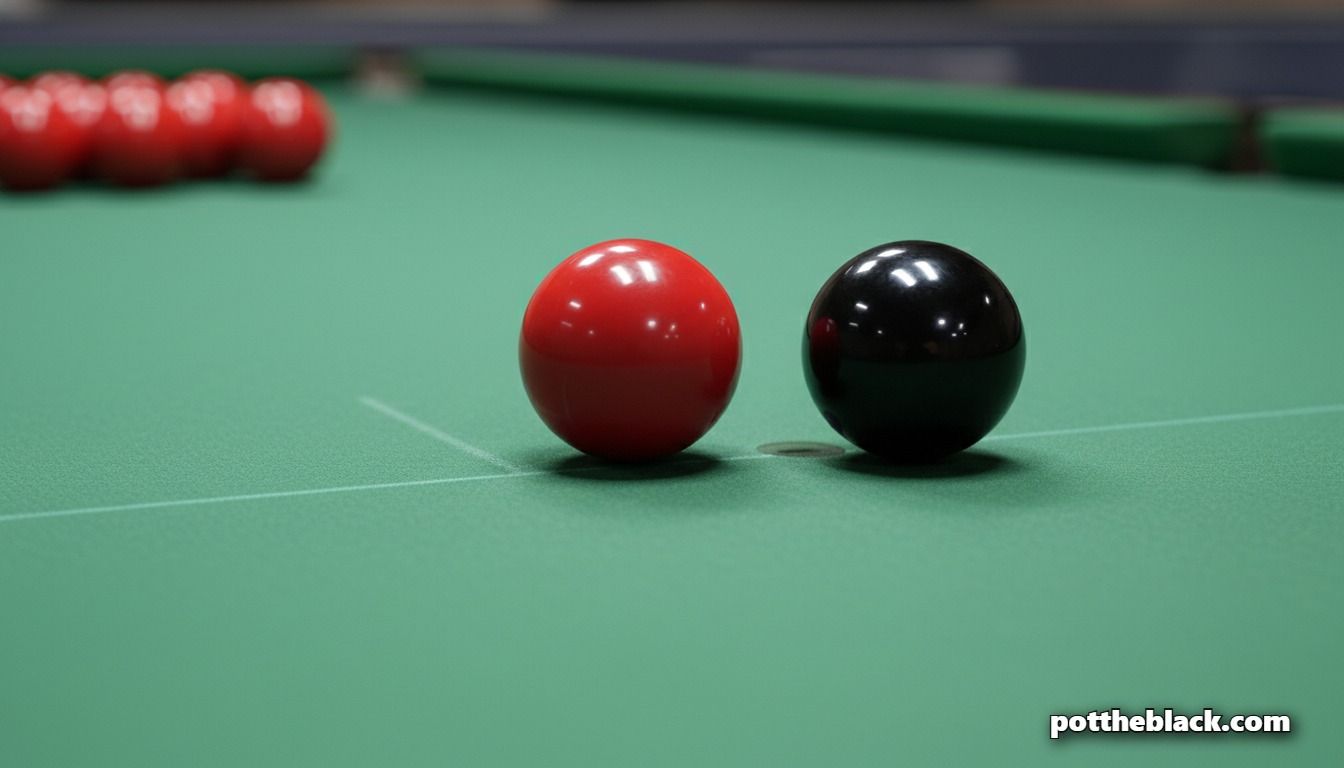
You pot the black, look up to celebrate, and there's a red sitting right on the spot you needed. Every club player's had this moment. Someone glances at you like you're supposed to know what happens next, and if you don't, you're about to look like you've never played a serious frame in your life.
Here's the actual rule — the club version and the professional version, because they're not quite the same conversation.
Rule One: Highest Spot Wins
If the ball's own spot is occupied, it doesn't go wherever looks convenient. It goes to the next highest value spot that's free.
Black's spot taken? Try pink. Pink's spot taken too? Blue. Then brown, green, yellow. You work down the ladder until you find a home for it. Nine times out of ten, that's as complicated as it gets.
Rob's Club Tip: nominate the colour out loud before you place it — "blue's going on the pink spot" — so nobody argues about it three shots later.
When Every Spot Is Covered
This is where people start guessing, and guessing is exactly what gets you a foul.
If every colour spot on the table has a ball sitting on it, the potted ball doesn't go on a cushion, and it doesn't go "somewhere near the middle." It goes as close as physically possible to its own spot, along the centre line of the table, moving up toward the top cushion — the end furthest from the baulk line.
It has to sit close enough to matter but not touch the ball in its way. Referees carry a ball marker specifically for this — a little metal disc they use to hold the position while they lift the obstructing ball out, check the spot, then put everything back. If you're playing without a ref, this is the one moment worth stopping and actually measuring it out with a straight edge, rather than eyeballing it under pressure.
Miss it by half an inch and your next positional shot on that ball is a completely different shot to the one you planned. That's not a small thing. It's the difference between a comfortable pot and a stretch across the baize you didn't want.
The Touching Ball Wrinkle
Sometimes the closest legal spot still leaves your ball touching another one. That's fine — it happens, and there's a name for it: a touching ball.
If it's your turn to play that ball next, you have to play away from it. You've already made contact by placing it there, so smashing into it again is a push shot and a foul. Nudge away, keep the break alive, move on.
This is one of the few areas where club play and the rulebook genuinely line up. Where things get messier is the miss rule around it, which — if you haven't read our breakdown of why the miss rule causes more arguments than it solves at club level, is worth a look before your next RSA night.
The One Everyone Actually Cares About: The Respotted Black
Here's the scenario that gets people Googling mid-match. Frame's tied. Every ball's gone except the black. What now?
The black gets respotted on its own spot, the players draw lots or toss a coin for who plays first, and whoever wins that toss gets the cue ball in hand from the D. First pot, or first foul, ends the frame. No exceptions, no second chances — it's the single tensest moment the sport produces, because there's nothing left on the table to hide behind.
It's not a rare club curiosity either. It's decided actual world finals. The very first Masters title, back in 1975, came down to a respotted black between John Spencer and Ray Reardon. Every time a big tournament decider gets that far — and we've covered a few of the recent ones in our Crucible preview coverage — you'll see exactly this rule play out under the exact pressure it was written for.
The mechanics matter here too. According to the official WPBSA rulebook, a colour being respotted must never be left touching another ball, full stop — the same principle as club play, just enforced to the millimetre with an overhead camera instead of a bloke with a steady hand. Wikipedia's rules breakdown confirms the same sequencing: scores level, only the black remains, it's respotted, and the frame restarts from there with nothing else on the table to complicate it.
The Golden Rule
Don't guess. If you're under pressure and unsure, take the extra ten seconds to check the spot properly rather than assuming. A ball placed a fraction off costs you the exact position you were playing for — and if you're in a proper competition, playing on from a wrongly spotted ball is a foul in itself.
Respect the table, get the spot right, and the rest of the frame takes care of itself.
One Thing to Watch Out For
Player’s often rush the spotting process when they're "under the pump" in a tournament.
If you place the Black slightly off-center because you’re in a hurry, you might find your next positional shot is completely ruined. Take the extra two seconds to make sure that ball is exactly where the physics says it should be.
It’s about respect for the baize. If you treat the table right, the rolls tend to go your way.
FAQ.
What happens if a snooker ball's spot is already occupied?
It moves to the next highest available spot on the table, working down the order: black, pink, blue, brown, green, yellow.
What if every single spot is covered?
The ball is placed as close as possible to its own spot, in a straight line toward the top cushion, without touching the ball that's blocking it.
What is a respotted black in snooker?
It's when the frame is tied with only the black remaining. The black goes back on its spot, players draw lots for who plays first, and the first pot or foul decides the frame.
Is placing a ball wrongly a foul?
Yes — if you play your next shot off an incorrectly spotted ball, it counts as a foul, even if the mistake wasn't intentional.
Can a respotted ball end up touching another ball?
Yes, and that's called a touching ball. You simply have to play away from it on your next shot rather than into it.

About Rob St George
Rob St George has been playing pool and snooker at club level for over two decades. Based in Auckland, he created Pot The Black to be the definitive technical resource for serious cue sports players — covering everything from shot mechanics to competitive rules, without the fluff.
More from the Table
Cue Sports Weekly - Wu Yize Wins Shenzhen, O'Sullivan Gets His Lifeline, and the Race for York Tightens
Cue Sports Weekly - Brennan Takes the 8-Ball Worlds, Shenzhen Open Hits the Last Eight