How to Beat a Better Snooker Player: 7 Tactics That Work
Reviewed against the official WPBSA Rules of Snooker
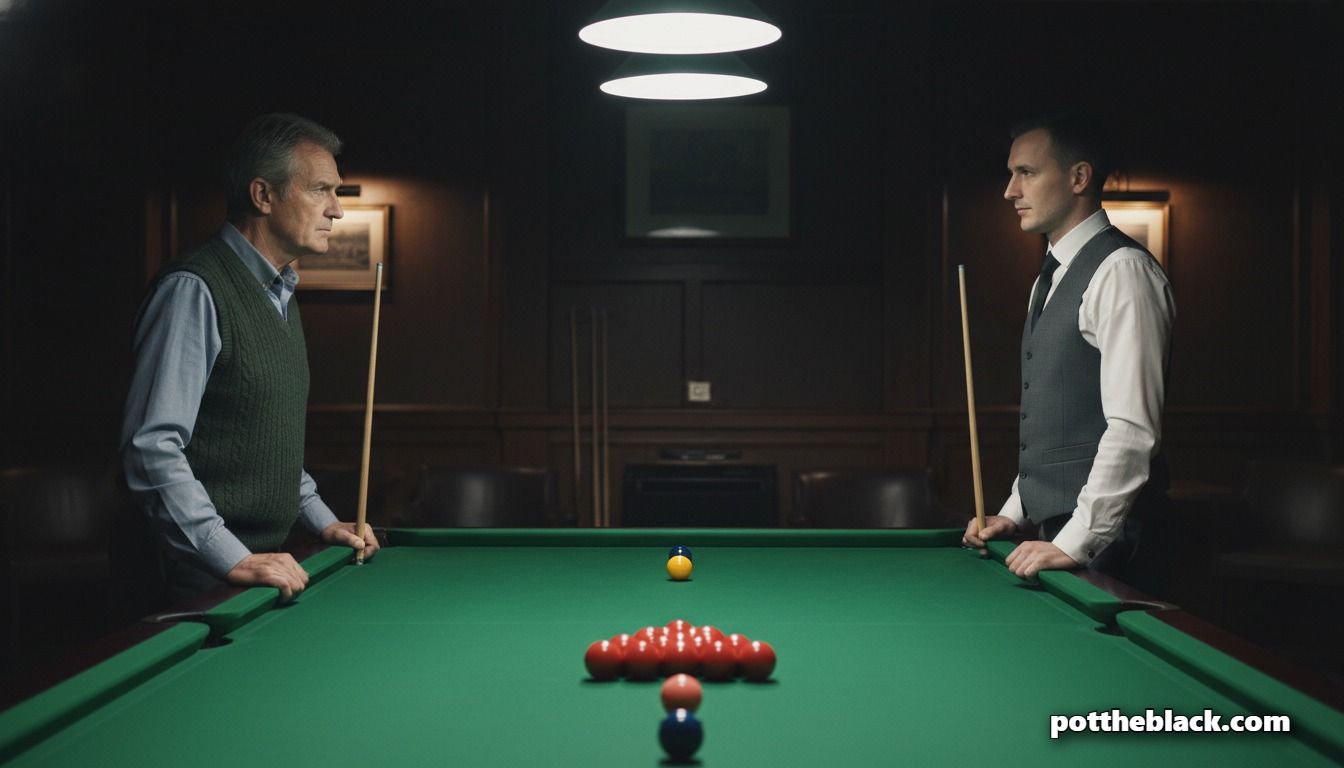
You're across the table from a bloke who's knocking in 40-breaks like he's shelling peas. Your highest break this season is a lucky 12. Sound familiar?
Snooker is a cruel game. The table is huge, the pockets are tight and the balls are small. If you try to out-pot a better potter, you'll get hosed.
But snooker isn't really about who hits the ball straightest. It's a game of position, patience and percentages, and that's where underdogs live.
I've played club snooker for over 20 years, and I've watched plenty of natural talents get beaten by an old dog who knows where the cue ball needs to go. This guide covers seven tactics for making a stronger player play your game instead of theirs.
In this guide
- Know your numbers
- Own the baulk end
- Learn three safeties properly
- Play the shot you can't afford to miss
- Break their rhythm without being a jerk
- Mess with the table map
- Play the frame in front of you
1. Know your numbers
Be honest about your potting. Not the pots you play on a good night, but the ones you actually make under pressure.
A long red to the corner might be 40% for you and 85% for them. A straight blue off its spot might be 90% for you. That gap is your whole game plan. You want frames decided by the shots where you're closest to them, and you want to avoid the ones where they're miles ahead.
If you don't have a number in your head for a shot, treat it as a bad one.
2. Own the baulk end
A better player wants an open table, with the reds spread and the cue ball sitting in the middle. Your job is to make sure they never get it.
If you're not sure of the pot, your objective changes. Get the cue ball back to the baulk cushion and leave nothing.
Force them to play from the top cushion, down the length of the table, with nothing on. Even a great potter hates it. Hold them there long enough and they'll get impatient and have a slash. That's your opening.
3. Learn three safeties properly
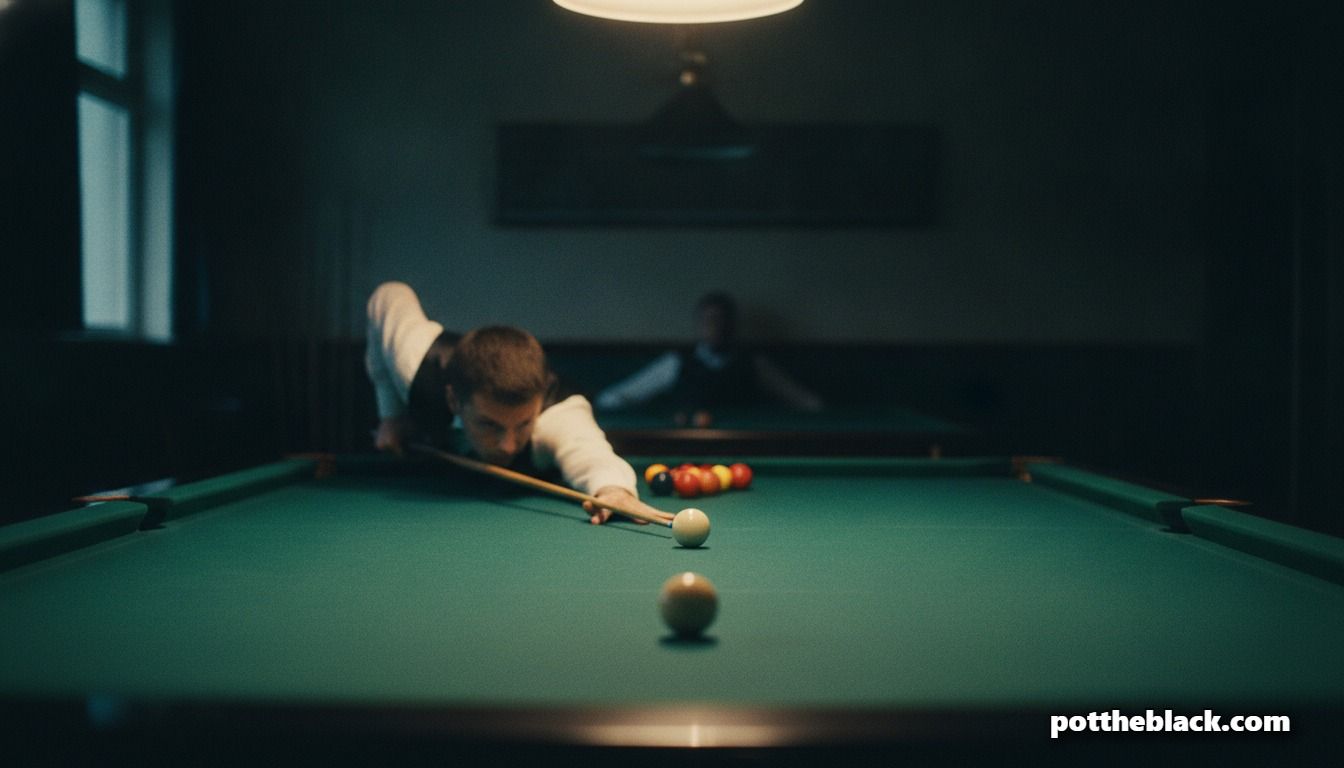
Playing safe only works if you can actually execute it. Most club players know they should, then leave a red hanging over a pocket. If you only practise three, make them these:
- The long red back to baulk, hitting a red from the pack edge and finishing with the cue ball tight on the baulk cushion.
- The thin contact on the pack, taking just enough off the outside red so the cue ball comes back off two cushions and the reds stay tied up.
- The snooker behind a colour, leaving the cue ball hidden behind the blue or pink so they have to escape.
Spend one practice session a week on these and nothing else. It's boring, but it wins more frames than another hour of long pots ever will.
You'll find more on the mechanics in the snooker section.
4. Play the shot you can't afford to miss
Here's where most club players go wrong. They see a red over the corner and go for it, even if the cue ball is heading for no man's land.
Before every shot, ask three questions. Can I pot it? Where does the white finish? What does the table look like if I miss?
If the third answer is "wide open", take the safety. Every time.
I tell the young fellas this all the time: don't play the shot you want to make, play the shot you can't afford to miss. You're playing for the win, not the highlight reel.
5. Break their rhythm without being a jerk
Better players have a tempo. Once they find their flow, they're very hard to stop.
I'm not telling you to stall. Nobody likes the bloke who takes three minutes over a straight blue, and it's poor etiquette. What you want is a consistent, unhurried pre-shot routine, the same every time, and the discipline not to rush it just because they're in a hurry.
Chalk up properly. Walk round the table. Take a breath. Two things happen. Their rhythm goes, and your own heart rate stays down, which matters more than people think.
6. Mess with the table map
A strong player loves a tidy layout. Black on its spot, pink clear, reds in a nice cluster. They can see a 50 before they've hit a ball.
So mess it up. During a safety exchange, nudge a couple of reds toward the side cushions. If you can leave the black tight to a cushion or a pocket jaw, do it.
Tying up the high colours lowers the ceiling on the frame. If the black and pink are awkward, your opponent can only score in small chunks, and better players often hate a slog.
Just be careful you're not leaving a loose red at the same time. The aim is to make scoring difficult, not to hand over a chance.
7. Play the frame in front of you
When they fluke a red or lay an impossible snooker, don't huff, roll your eyes or shake your head. Keep a straight face. If you look like it doesn't bother you, it starts to bother them.
The mental side is huge, so stay in the moment. If you're still thinking about the frame you lost twenty minutes ago, you've already lost the one you're playing.
Focus on the next shot only. Can you get it back to baulk? Good onya. Do that, and the rest takes care of itself.
[Rob: this is a good spot for one short real story from a league night where you did exactly this.]
Pick your format if you can
Variance helps the underdog. In a best-of-three, a weaker player with a good safety game has a real shot. In a best-of-nineteen, the better player's potting almost always shows through.
If you get a say in the format, or you're playing a handicap event, know which side of that you want to be on. Check the rules before a knockout so nothing catches you out, and if you want a hand with draws and brackets, the tools section has you covered.
Real-world proof: Mark Selby
This isn't just club theory. It's how big matches get won.
In the 2014 World Championship final, Mark Selby trailed Ronnie O'Sullivan 3-8 and later 5-10, then won 18-14. O'Sullivan is widely regarded as one of the most gifted potters ever.
Selby didn't do it by potting everything. He controlled the tempo, refused low-percentage shots and made O'Sullivan work for every chance. He still had to score when the chances came, and he did, including a century late on. That's the point. Safety gets you the opportunities, but you still have to finish them.
He did it again in the 2017 final against John Higgins, coming back from 10-4 down to win 18-15.
At the end of the day
Beating a better player isn't about being better than them for the whole night. It's about being smarter than them for forty minutes.
Use the cushions. Own the baulk end. Play the percentages. And for heaven's sake, keep your chin down on the cue.
You might not walk away with a century break, but you might walk away with the win and a bit of respect from the local sharks.
Sources & further reading
WPBSA — Official Rules of Snooker · BBC Sport — Mark Selby's 2014 World Championship win
FAQ.
Is playing safe boring or unsportsmanlike in snooker?
No. Safety play is a core, legal part of the game at every level, including professional snooker. A well-played safety is just as valid as a pot.
How long should I take over a shot without breaking etiquette?
There's no official time limit in most club play, though some professional formats use shot clocks. Aim for a consistent, unhurried routine on every shot rather than stalling when you're under pressure.
What's the biggest mistake underdogs make?
Going for low-percentage pots to keep up on the scoreboard. It hands the better player exactly the game they want.
How do I get out of a snooker against a stronger player?
Keep the escape simple. Aim to hit a ball on and leave the cue ball safe, rather than going for a miracle. Be aware that referees can call a miss if you don't make a genuine attempt.
Which safety shot should I practise first?
The long red back to the baulk cushion. It's the most common safety you'll need, and it teaches you the weight control every other safety relies on.
Does this work in pool as well?
Some of it does. The principles of position and percentages carry over, but snooker's bigger table and tighter pockets make safety play far more valuable.

About Rob St George
Rob St George has been playing pool and snooker at club level for over two decades. Based in Auckland, he created Pot The Black to be the definitive technical resource for serious cue sports players — covering everything from shot mechanics to competitive rules, without the fluff.
More from the Table
Cue Sports Weekly - Wu Yize Wins Shenzhen, O'Sullivan Gets His Lifeline, and the Race for York Tightens
Cue Sports Weekly - Brennan Takes the 8-Ball Worlds, Shenzhen Open Hits the Last Eight