Pool Fouls Explained: A Quick-Reference Guide for Heyball and 8-Ball
Nothing kills the flow of a frame like a dispute over a foul nobody's 100% sure about.
This guide breaks down the standard fouls in Heyball and 8-Ball under World Pool-Billiard Association (WPA) rules, so next time something happens at the table, you can settle it in seconds.
In both games, a standard foul means the same thing: your turn ends and your opponent gets ball in hand — they can place the cue ball anywhere on the table before their next shot.
Table Talk
Pub or Local Rules
Everything below is the official wording — but plenty of clubs, pubs and local leagues play their own version. It's common for venues to soften or skip rules like "no foot on the floor," play winner-stays-on instead of alternating breaks, or treat a jumped ball differently than the official rulebook does. None of that is wrong, it's just a house variation.
The fix is simple: agree on the rules before you break, not after a disputed shot. Especially around foul penalties — "ball in hand anywhere" versus "play from where it lands" can completely change a game.
8-Ball Fouls
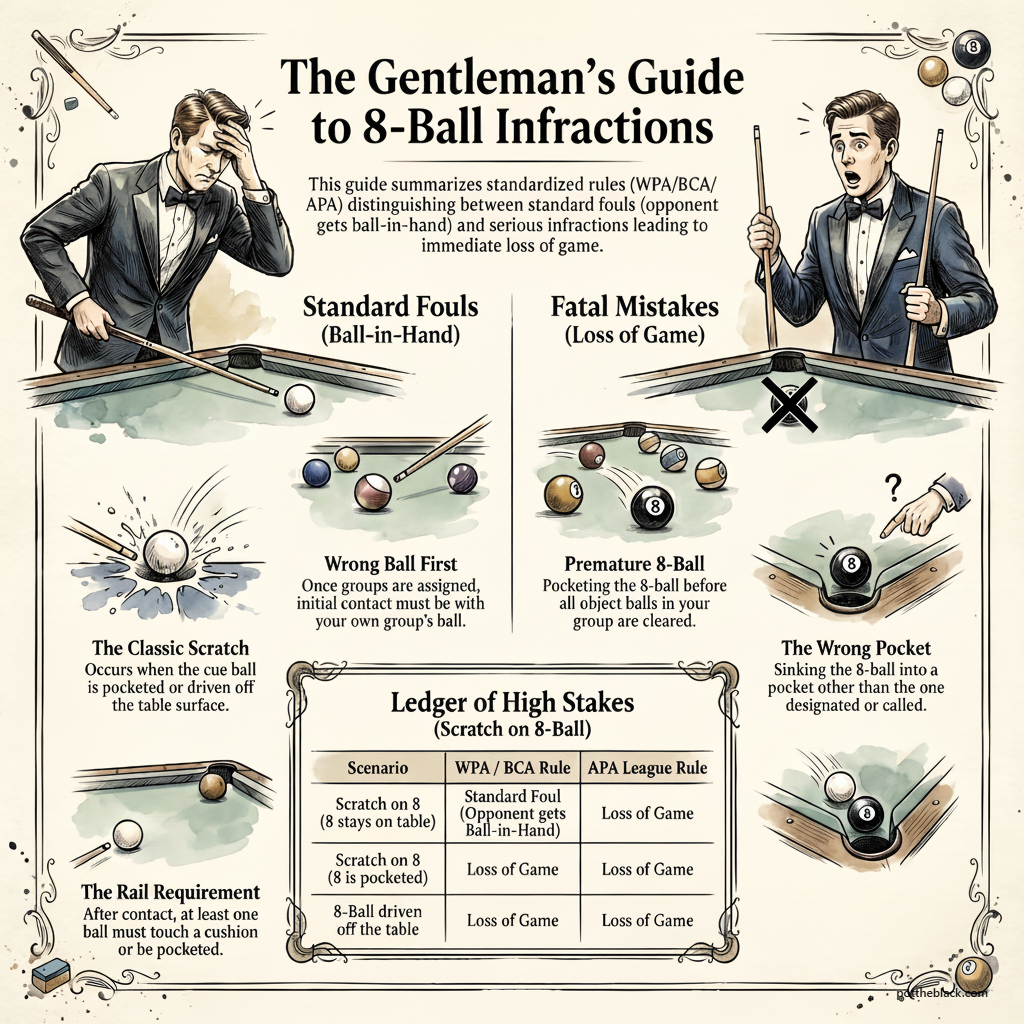
Standard fouls (opponent gets ball in hand):
- Wrong ball first — your cue ball must contact a ball from your own group (solids or stripes) first, unless the table is still open.
- Cue ball scratch — potting the cue ball, or knocking it off the table entirely.
- No rail after contact — if you don't pot a ball, either the cue ball or an object ball must reach a cushion after contact.
- Touched ball — accidentally touching or moving any ball with your hand, cue, clothing or chalk.
- Double hit / push shot — the tip stays in contact with the cue ball too long, or strikes it twice on one stroke.
- Balls still moving — shooting before all balls have come to a complete stop.
- No foot on the floor — at least one of your feet must touch the ground when you strike.
- Playing out of turn or slow play (where a shot clock is in use).
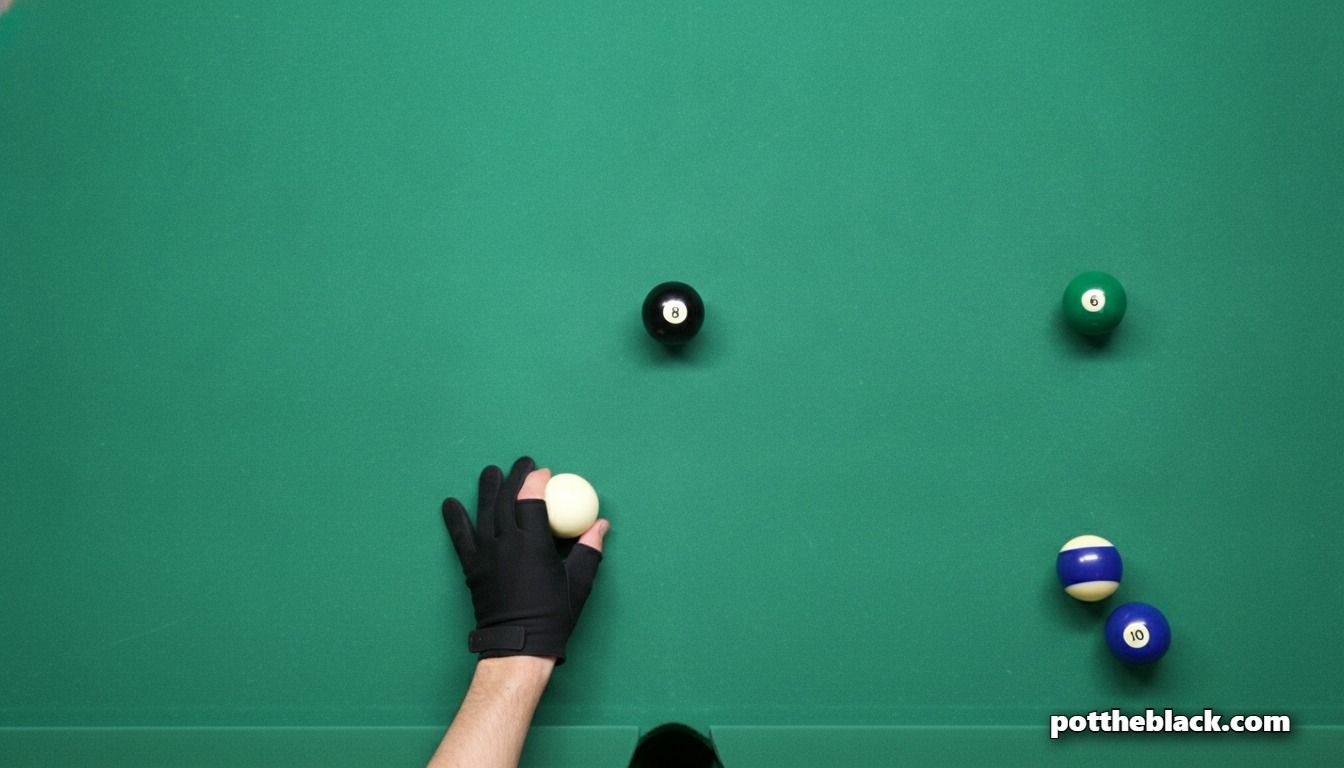
Ball in hand
Game-ending fouls (instant loss of the rack):
- Pocketing the 8-ball on the same shot as your last group ball.
- Jumping the 8-ball off the table at any point.
- Pocketing the 8-ball in a pocket other than the one called.
- Potting the 8-ball before clearing the rest of your group.
A handy one to remember: three consecutive standard fouls in the same game = automatic loss, provided your opponent warns you after the second.
Heyball Fouls
Heyball is the newest of the three — a WPA-backed hybrid played on a larger table with 15 numbered balls, governed by the International Heyball Pool Association (IHPA). Groups are split 1–7 and 9–15, and like 8-ball, you clear your group before potting the 8-ball to win.
Because Heyball's rulebook was built directly on the WPA's 8-ball and 9-ball framework, the standard foul list will look familiar: wrong ball first, scratches, no rail after contact, touched balls, double hits, balls still moving, and so on all carry the same cue-ball-in-hand penalty.
A couple of fouls are more specific to Heyball:
- Head string placement — when you have ball in hand behind the head string, the first ball you contact must also be beyond the head string, unless your cue ball crosses the line first.
- Shot clock violations — Heyball is typically played with a running shot clock (commonly 30 seconds, plus a limited number of extensions per rack); failing to shoot in time is a foul.
Rules and Sources Matrix

The FoulMatrix
Every foul, every ruling, every governing body — in one table. Heyball, 8-ball, 9-ball and Chinese 8-ball, cross-referenced against WPA, BCA, APA, VNEA and IHPA rule sets.
| Severity | Rule | The Foul | The Penalty | Sources |
|---|---|---|---|---|
| 8Loss of Game / Rack |
Loss of Game / Loss of Rack WPABCAAPAVNEAIHPA
|
Pocketing the 8-ball and fouling; pocketing the 8-ball before the group is cleared; pocketing the 8-ball in an uncalled or wrong pocket; driving the 8-ball off the table; or scratching while pocketing the 8-ball. | Loss of the current game or rack. | |
| Standard Foul |
Standard Foul (Ball in Hand) WPABCAAPAVNEA
|
Cue ball scratch; hitting the wrong ball first; no rail contact after ball-to-ball contact; no foot on the floor; double hit; push shot; or touching a live ball with hands or cue. | Opposing player receives cue ball in hand anywhere on the playing surface. | |
| Situational Ruling |
Legal Break Shot Violation BCAAPA
|
Failure to either pocket a ball or drive at least four numbered balls to a rail during the break shot. | BCA: incoming player may accept the table, rerack and break, or have the offender rebreak. APA: balls are reracked and re-broken by the same player. | |
| Situational Ruling |
Scratch on Legal Break BCA
|
Pocketing the cue ball on a legal break shot. | Foul; table remains open; incoming player has cue ball in hand behind the head string. | |
| Situational Ruling |
8-Ball Pocketed on Break (Scratch) BCA
|
Pocketing the 8-ball and scratching the cue ball on the break shot. | Incoming player can request a rerack or have the 8-ball spotted and shoot with ball in hand behind the head string. | |
| Escalating |
Intentional Foul IHPAWPA
|
Cue ball first contacts the other group of balls on purpose, or deliberately executing a soft break to stall. | First offense is loss of rack; second offense results in loss of the match. | |
| Escalating |
Three Consecutive Fouls WPA
|
Committing three fouls in a single frame without an intervening legal shot. | Loss of the frame. | |
| Escalating |
Unsportsmanlike Conduct WPAACSAPA
|
Distracting the opponent; changing ball positions; intentional miscuing; practicing during a match; or using prohibited equipment like specialty jump cues. | Penalty appropriate to the offense: warning, standard foul, loss of rack, match ejection, or loss of game. | |
| Standard Foul |
Shot Clock Violation / Slow Play WPAVNEAIHPA
|
Failure to contact the cue ball within 45 seconds (WPA/Heyball) or taking longer than one minute between shots after a warning (VNEA). | WPA/Heyball: standard foul (ball in hand). VNEA: first two infractions are fouls; the third results in loss of game. | |
| Standard Foul |
Jump and Massé Shot Foul BCAAPA
|
Moving an impeding numbered ball during a jump/massé attempt, or purposely miscuing the cue ball to scoop it into the air. | Cue ball foul; opposing player gets ball in hand. | |
| Standard Foul |
Object Ball Jumped Off Table BCA
|
Driving any object ball (other than the 8-ball) off the table during a shot. | Foul and loss of turn. Jumped balls are spotted. | |
| Variant Ruleset |
Chinese 8-Ball Fouls Chinese 8-Ball (Ringo)
|
Shooting with both feet off the floor; striking the lower half of the cue ball for a jump shot; touching an object ball with the cue; or pocketing the 8-ball early/scratching on the 8-ball. | Ball-in-hand for the opponent, loss of game for 8-ball infractions, or pocketed balls not counted. |
Sources
As supplied — linked where the exact document was independently verified. Unlinked entries are listed as given; worth confirming before citing in a dispute. ⚠ flagged = unconventional or unverified source, double-check before relying on it.