Cue Sports Weekly: Mark Selby Makes China Open History as a Five-Way Title Race Opens Up, and Pune Delivers a Shootout for the Ages
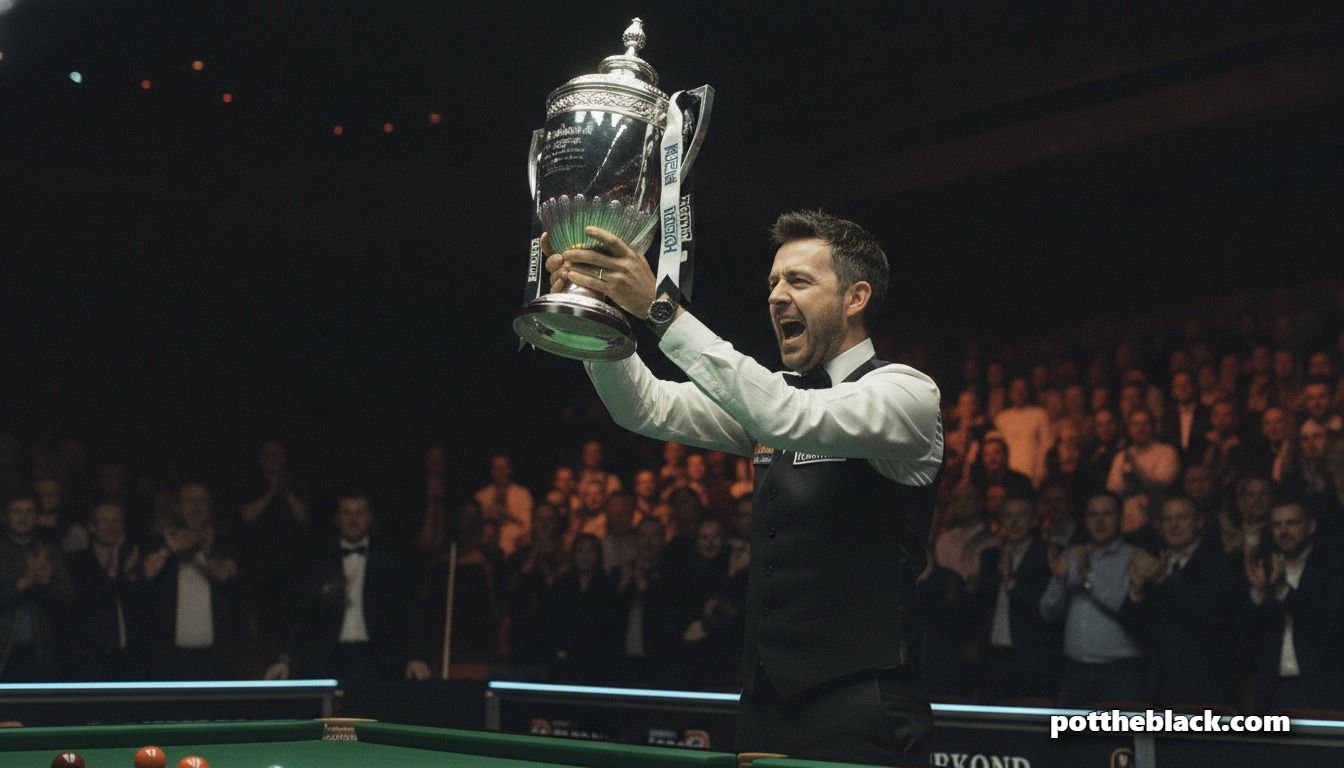
Forty-three years old. Bravely sporting a new cue for the first time in two decades, and somehow still finding another gear nobody saw coming.
Mark Selby just rewrote a piece of China Open history.
Meanwhile in Pune, one final came down to a shootout after the two players couldn't be separated across ten frames.
Let's get into it.
Mark Selby Wins a Record Fourth China Open, and the World Number One Race Blows Wide Open
Selby beat Noppon Saengkham 10-6 in Taiyuan on Sunday to become the first player ever to win the China Open four times.
It's his 26th ranking title, moves him to seventh on the all-time list level with Neil Robertson, and vaults him from ninth to fifth in the world rankings — he has a genuine shot at world number one if he backs it up at the Wuhan Open this week.
The story of the tournament almost wasn't Selby's at all. Saengkham, ranked 45th in the world and playing through qualifying just to reach the main draw, put together one of the great underdog runs of the season — beating Judd Trump, Ronnie O'Sullivan, and Shaun Murphy on his way to a maiden ranking final. He came out swinging too, opening with a break of 138 to lead 2-1, and had Selby 4-2 down before the four-time world champion dragged the first session level at 4-4. From there Selby took over, reeling off breaks of 58, 90, 69, and 52 to storm into an 8-4 lead, and though Saengkham clawed back to 9-6, Selby closed it out with a composed frame 16 to lift the trophy.
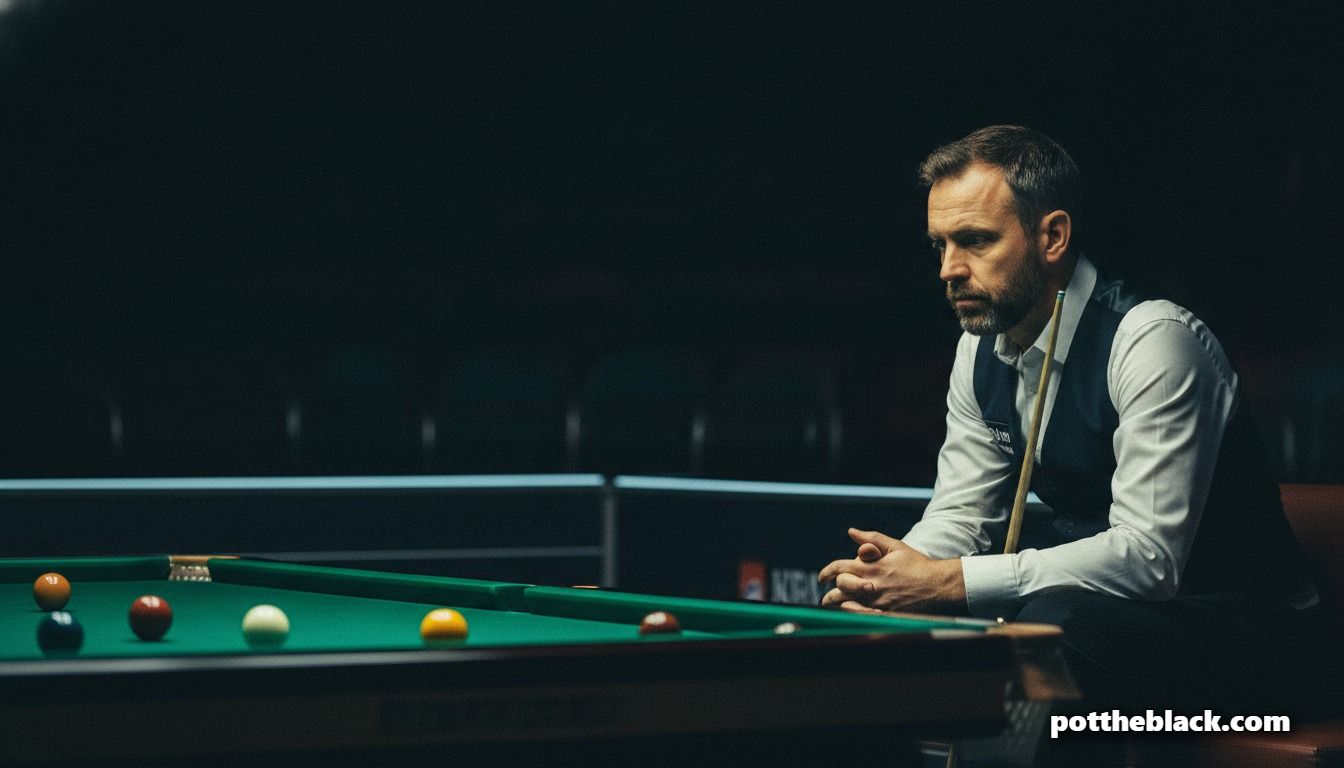
There was real emotion behind the win too. Selby revealed afterward that he'd learned mid-tournament that a close friend since childhood had been given a serious health prognosis, and dedicated the win to him: "If he is watching, this one is for you mate."
With Selby's win, the picture at the top of the game has genuinely opened up. Five players — Zhao Xintong, Neil Robertson, Wu Yize, Selby, and Trump — can all finish this month as world number one depending on how the Wuhan Open plays out, which starts Sunday. It's rare to see the top of the rankings this contested this early in a season.
Pune Wraps Up: Potts and Fisher Both Retain, and Fisher Needed a Shootout to Do It
The 2026 WPA Heyball World Championships closed out in Pune with both defending champions successfully holding onto their titles — though only one of them made it look comfortable.
Gareth Potts beat Jordan Shepherd 7-4 in the men's final, pulling away after the match was tied 3-3 to leave the previously-unbeaten Shepherd, fresh off an International Heyball Open win earlier in the month, with no answer down the stretch.
The women's final was the genuine classic of the week. Kelly Fisher raced out to a 4-1 lead over Thailand's Waratthanun Sukritthanes and looked to be cruising toward an easy defence. Sukritthanes had other ideas, clawing the match all the way back to 5-5 and forcing a race-to-6 title decider into a shootout. Fisher held her nerve when it mattered most, closing it out 5-3 in the tiebreak to retain her crown.
It capped off what was, by most measures, the richest cue sports event ever held in India — 128 players from 40 nations, six of the world's top ten men and eight of the world's top ten women, all competing for a combined $400,000 purse. If you're still getting your head around what actually makes heyball different from the pool most club players grew up on, our Heyball vs 8-Ball comparison tool breaks down the table, the pockets, and the clock properly. And for anything foul-related, our Heyball Foul & Ball-in-Hand Explainer covers the mechanics that trip up most players coming from another cue sport.
Drill of the Week: The Safety Ladder
Discipline: Universal — works for 8-ball, 9-ball, and heyball
Difficulty: Intermediate
What it trains: Consistent weight control on safeties played from progressively longer distances
Setup
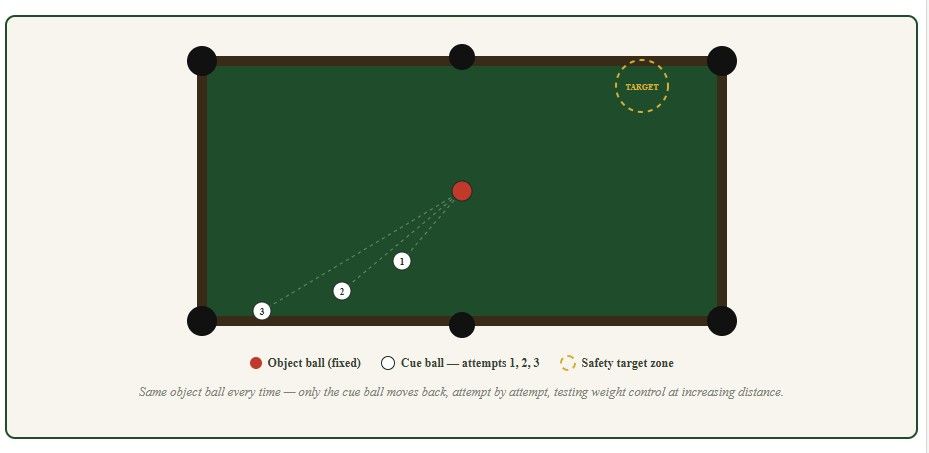
Place a single object ball anywhere near the center of the table. Set the cue ball a short distance away for your first attempt.
The Task
Play a safety that leaves the cue ball touching or nearly touching a cushion, out of a clean line to the object ball. Then move the cue ball back further for the next attempt, and again after that — three or four distances total, each one further than the last.
Why It Works
Short safeties are forgiving. A slightly heavy touch barely matters over eighteen inches. Stretch that same shot out to the length of the table and the smallest miscalculation in weight sends the cue ball either not far enough to be safe, or careening past the spot you wanted and leaving an easy return shot instead. This drill isolates exactly where your weight control starts breaking down as distance increases, which is far more useful to know before a real match than finding out mid-frame.
Looking Ahead
The Wuhan Open starts Sunday with genuinely the most contested world number one race in recent memory — five players, all with something to play for. One quirk in the draw worth knowing before you go looking for it: Robbie Williams, the English pro (not the singer, though we get why the name stops people mid-scroll) has withdrawn for medical reasons just days out. His scheduled first-round opponent was three-time world champion Mark Williams, who now advances straight to the round of 32 on a walkover. We'll have full coverage of the tournament once the draw plays out.
If a rules argument comes up at your own table in the meantime, our Tools section has both foul explainers ready to settle it, plus the free draw maker if you're organizing anything yourself.
About Rob St George
Rob St George has been playing pool and snooker at club level for over two decades. Based in Auckland, he created Pot The Black to be the definitive technical resource for serious cue sports players — covering everything from shot mechanics to competitive rules, without the fluff.
More from the Table
Cue Sports Weekly - Wu Yize Wins Shenzhen, O'Sullivan Gets His Lifeline, and the Race for York Tightens
Cue Sports Weekly - Brennan Takes the 8-Ball Worlds, Shenzhen Open Hits the Last Eight