Official World 9-Ball Rules.
9-ball is the most unforgiving game in the cue sports world — no calling shots, but every foul hands over the whole table. If you're used to 8-ball's forgiveness, this game will punish you fast.
- Object of the game — hit the lowest numbered ball first every shot, then legally pot the 9-ball to win the rack.
- The break matters — you have to hit the 1-ball first and either pot a ball or send four to a rail, or it's a foul.
- Push-out is a one-time move — only allowed right after the break, and only if you announce it before shooting.
- Fouls are brutal — wrong ball first, no rail, or a scratch all give your opponent ball-in-hand anywhere on the table.
- Three fouls in a row loses the rack — but only if someone actually warns you after the second one.
I've watched more 9-ball racks end in an argument than I have seen end in a handshake.
Not because anyone's cheating — because half the table thinks they know the rules and the other half learned them from whoever was standing at the table before them. Chinese whispers, but with a cue ball.

So this isn't another word-for-word copy of the official rulebook. You can get that straight from the World Pool-Billiard Association if you want the full legal text, and honestly you should bookmark it, because the WPA quietly updated the rules again in late 2025, with a further edition dated January 2026. Most of what's floating around online still reflects the old wording. What follows is the practical version: what the rules actually say, and where I've seen them get mangled in a hundred RSA club nights.
Quick Read
9-Ball Rules: The Key Facts
- The goal: hit the lowest numbered ball first, pot the 9-ball to win.
- The break: hit the 1-ball first, pot a ball or send four to a rail.
- Push-out: only on the shot right after the break, must be announced.
- Fouls: wrong ball first, no rail, or a scratch all hand over ball-in-hand.
- Three fouls in a row: automatic loss of the rack.
The rack and the break
Nine balls, one to nine, plus the cue ball. Racked in a diamond, one-ball on the foot spot at the front, nine-ball dead centre, everything else random. Nothing controversial there.
The break is where the first argument usually starts. To be legal, you have to strike the 1-ball first, and then either pot a ball or send at least four object balls into a rail. Miss either requirement and it's a foul — which in 9-ball means your opponent gets ball-in-hand anywhere on the table, not just behind the line like some 8-ball variants use. That's a much bigger penalty than most casual players expect, and it's usually the first thing that catches new players off guard.
The push-out — the single most misunderstood rule in the game
If I had to bet on which rule causes the most arguments in a night, it's this one.
Right after a legal break, the player at the table can call a push-out. On that one shot, and only that shot, you don't need to hit any ball or touch a rail — the usual foul rules are suspended for it. You just have to announce it before you shoot, out loud, to your opponent or the referee if there is one. Say nothing and it's treated as a normal shot.
Here's the part people forget: after the push-out, the incoming player gets to choose. They can play the position as it lies, or hand the shot straight back to whoever pushed. That decision is theirs, not the pusher's. I've seen more than one player try to push out and then insist their opponent has to play from there. They don't.
One more wrinkle — if the nine goes in off a push-out, it doesn't count as a win. It gets respotted, and play continues as normal.
Legal shots and the "slop" question
Every shot, you have to hit the lowest numbered ball on the table first. That part nobody argues about.
What does get argued about: you don't have to call your shot. If you're aiming at the two and it clips the seven into the corner instead, that counts. No calling required in standard 9-ball, unlike 8-ball where plenty of house rules demand it. Combination shots off the lowest ball are completely legal too, including combos straight into the nine for the win — the so-called golden break included.
Fouls and ball-in-hand
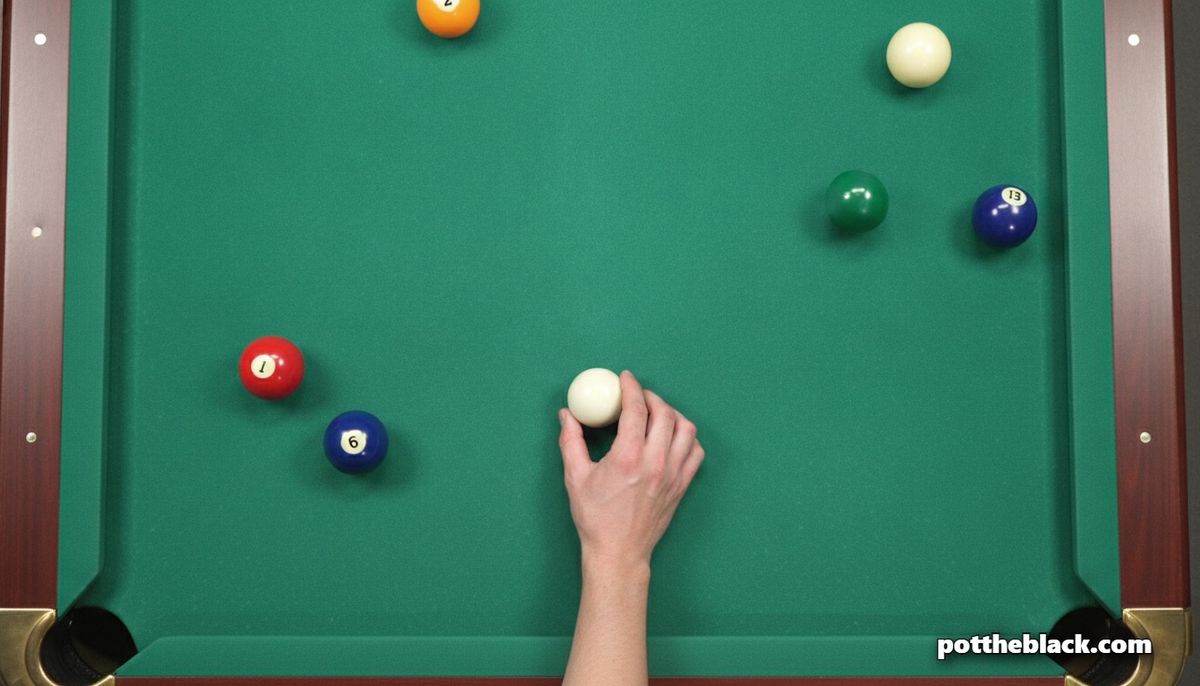
9-ball punishes fouls harder than most games people are used to. Wrong ball first, no rail after contact, a scratch, knocking an object ball off the table — any of these hands your opponent ball-in-hand anywhere on the table. Not behind a line. Anywhere.
That single fact changes how people should be playing safeties, and most club players don't respect it enough. A cheap foul in 9-ball can cost you the rack outright, in a way it simply can't in 8-ball.
The three-foul rule
Foul three times in a row, in the same rack, without a legal shot in between, and you lose the game on the spot. It sounds brutal until you remember it exists specifically to stop someone deliberately fouling over and over to avoid giving up ball-in-hand.
The catch a lot of clubs get wrong: someone's meant to warn you after the second foul. If nobody does, and you foul a third time, that third foul technically doesn't trigger the loss. Doesn't mean you should rely on that loophole — I've watched grown adults fall out over exactly this at Papatoetoe RSA more than once.
Why your pub's "house rules" probably aren't WPA rules
This is the bit most rules pages skip entirely, and it's the bit that actually matters if you play socially rather than in sanctioned events. A lot of clubs run their own hybrid — maybe you have to call the nine, maybe push-outs aren't allowed at all, maybe there's no three-foul rule in play. None of that's wrong, exactly. It's just not what the official structure says, and it's worth knowing the difference before you turn up to an actual tournament expecting your local variant to apply. If fouls specifically are where you keep getting caught out, the breakdown in our Heyball and 8-ball fouls guide covers the foul categories in more depth, and a lot of the same logic carries over.
If you want to see what these rules look like under real tournament pressure rather than club-night chaos, the World 9-Ball Championship preview is worth a read — it's the clearest showcase of how push-outs and safeties get used at the top level. And if it's the disputes themselves you're trying to avoid rather than just the rules, our piece on handling pool's biggest arguments is written for exactly that situation, even though it's framed around 8-ball.
For the physics-nerd end of things — why a push-out actually works the way it does, or how spotting interacts with a cluster of balls — Dr. Dave's pool rules FAQ is one of the better technical breakdowns out there, and it's where I go when I want the mechanical "why" behind a rule rather than just the "what."
At the end of the day, 9-ball doesn't give you anywhere to hide. In 8-ball you can bury the cue ball behind a cluster of your own group. In 9-ball, every shot exposes you. That's exactly why it rewards precision over volume, and why the rules around fouls and pushouts matter so much more here than in almost any other pool discipline.

FAQ.
Do you have to call your shots in 9-ball?
No. Standard WPA 9-ball doesn't require calling pockets. Any ball legally pocketed counts, as long as the cue ball hit the lowest numbered ball first.
What happens if you push out and accidentally pot the nine?
It doesn't count as a win. The nine gets respotted, and the incoming player still gets the choice of playing on or handing the shot back.
Can you push out on any shot?
No, only on the shot immediately following a legal break, and only if you announce it first. Any other shot is played under normal rules.
What's the penalty for a foul in 9-ball?
Ball-in-hand anywhere on the table for your opponent, not from behind a line. This applies to nearly every standard foul, including a wrong first ball, no rail after contact, and a scratch.
Does the three-foul rule apply in casual or club play?
Officially, yes, under WPA rules — but plenty of clubs and pubs don't enforce it, or run a modified version. Worth checking with whoever's running the table before assuming it's active.