Taom V10 vs. Master vs. Kamui: The Ultimate Pool Chalk Comparison
Our Rating
9.5/10
The Specs
Details coming soon
I've spent a lot of time leaning over the cloth in clubs from Auckland to New Plymouth. In that time, I've seen players spend a fortune on a custom cue, only to use a piece of house chalk that's been sitting in a puddle of spilled beer.
It makes no sense, mate.
Think of your chalk as the tyres on a racing car. You can have all the horsepower in the world, but if you don't have traction where the rubber meets the road — or the leather meets the cue ball — you're going to spin out.
If you're looking to upgrade, you're likely looking at three names: Master, Kamui, and Taom. One costs fifty cents, the others cost as much as a round of drinks. Let's break down which one actually belongs in your cue case, and why the price difference is bigger than it looks on the shelf.
What chalk is actually doing
Quick bit of theory before the comparison, because it changes how you think about all three of these. Chalk isn't chalk in the blackboard sense — it's a compound of aluminium silicate and an abrasive grit, bound together and pressed into a cube or cylinder. The grit is what matters. It creates thousands of microscopic teeth on the surface of your tip, and those teeth are what grip the cue ball on contact, especially when you're applying side spin.
No chalk, no teeth, no grip. Hit the ball with any real amount of side and the tip just skids off — that's your classic miscue, cue ball squirting sideways instead of doing what you asked it to.
Where the three brands differ is in the grit size, the binder, and how much of that grit actually transfers and stays on the tip versus flaking off as dust. That's the whole ballgame, and it's why "expensive chalk" isn't marketing fluff — it's a genuinely different formulation doing a genuinely different job.
The baseline: Master chalk
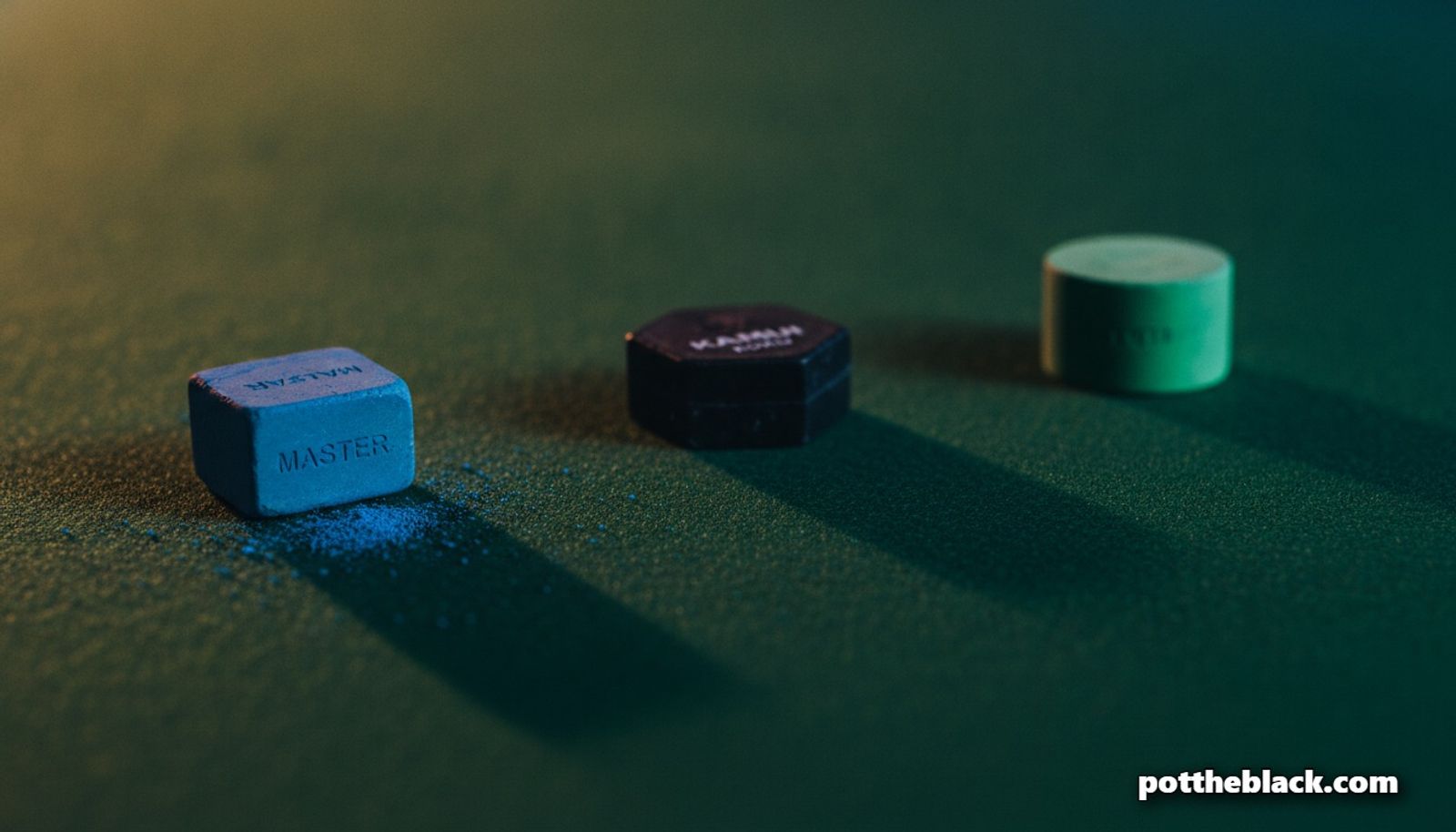
Master is the "old faithful." It's produced by Tweeten in Chicago, and it's been the industry standard since your grandad was playing.
The feel: it's dry. When you apply it, you get that classic dusty puff. It's abrasive, which means it bites into the leather tip well, but that same abrasiveness is what's coming off in dust form with every application.
Why it's still around:
Consistency. You know exactly what you're getting, every cube, every table, every club. It provides solid grip for about 1 to 2 shots before you need to re-apply.
Price. You can buy a gross — 144 cubes — for the price of one premium piece. If you're the sort who loses chalk at the club every week, or leaves a piece behind on every table you play, this is genuinely your best option and there's no shame in it.
The downside is the mess. It gets on your hands, your bridge hand, and most importantly, it coats the cue ball. That blue dust causes what players call kicks or clings, where the balls stick together for a split second on impact and send your object ball miles off-line. If you've ever hit a shot that felt perfect and watched the object ball go somewhere it had no business going, that's usually chalk dust on the cue ball, not a bad stroke.
The grip king: Kamui (0.98 and Roku)
When Kamui hit the scene from Japan, it changed how we thought about "premium" gear. They treat chalk like precision engineering rather than a consumable you buy in bulk.
The feel: Kamui 0.98 is oily, almost creamy. It feels like putting lipstick on your cue. It's incredibly tacky straight out of the box. Their newer Roku, the hexagonal one, is a bit drier but still clings to the tip far longer than Master ever does.
The performance side is where Kamui earns its reputation. If you're a player who loves three tips of side to bring the white ball around three cushions, Kamui gives you the most confidence of the three — you genuinely won't miscue, even under load. It's also got real persistence, meaning you can play an entire rack without needing to touch the chalk again.
The downside: the old Kamui, the 0.98 and 1.21 formulas, was notorious for being messy in a different way to Master. It didn't puff off as dust, but it transferred to the cue ball in thick, waxy patches that built up over a session. The Roku version fixed a lot of this, but it's still noticeably grabbier and leaves more residue than Taom.
The clean freak: Taom V10
This is what I'm seeing in almost every serious competition lately. Taom is a Finnish company, and their V10 formula is currently the gold standard for anyone playing for something more than pride.
The feel: it feels hard, almost like chalking with a pebble. When you rub it on the tip, it doesn't look like much is happening. There's no dust, none, which throws a lot of players the first time they try it because it feels like it's not working.
It's working. Because there's next to no dust, the cue ball stays pristine, which is the entire selling point. I've played five-hour sessions with V10 where I didn't wipe the white ball once. That alone tells you something, because normally by the second hour of a long session you've got a visible grey ring building up on the cue ball from dust transfer.
Longevity is the other advantage nobody talks about enough. A single piece of V10 will last most players 6 to 12 months of regular play. You're not drilling into it the way you do with Master, so it wears down at a fraction of the rate.
The downside is entirely about the shape, not the performance. It's a cylinder, not a cube, so if you set it on the rail and the table isn't dead level, or someone bumps the cushion, it rolls straight off and goes skittering across the floor. At $30 or so a piece, you'll be diving under the table pretty quick to save it the first time it happens.
The Auckland factor: humidity and storage
Here's something that doesn't get covered in most chalk comparisons because most of them are written by Americans playing in air-conditioned rooms. Auckland's humidity swings hard depending on the season, and that actually affects how your chalk performs and how long it lasts.
Master, being a softer and more porous compound, absorbs moisture from the air more readily. Leave a cube in your case through a humid Auckland summer and it can go slightly gummy, which actually changes how it applies — you'll notice it clumping rather than puffing cleanly. Nothing ruins it outright, but it's worth keeping a spare cube in a dry spot rather than leaving one loose in a damp case.
Kamui and Taom are both far less porous, so they're more forgiving here. It's one of the quieter reasons serious players justify the extra cost if they're playing across multiple venues with inconsistent storage, like the club-to-club schedule most interclub players in Auckland end up on.
Rob's technical drill: the miscue limit test
Don't take my word for any of this. Try it yourself next time you're at the table, and you'll feel the difference rather than just reading about it.
Clean your tip first — scuff it lightly so it's not glazed over from old chalk residue.
Chalk up once, a good even coat, nothing excessive.
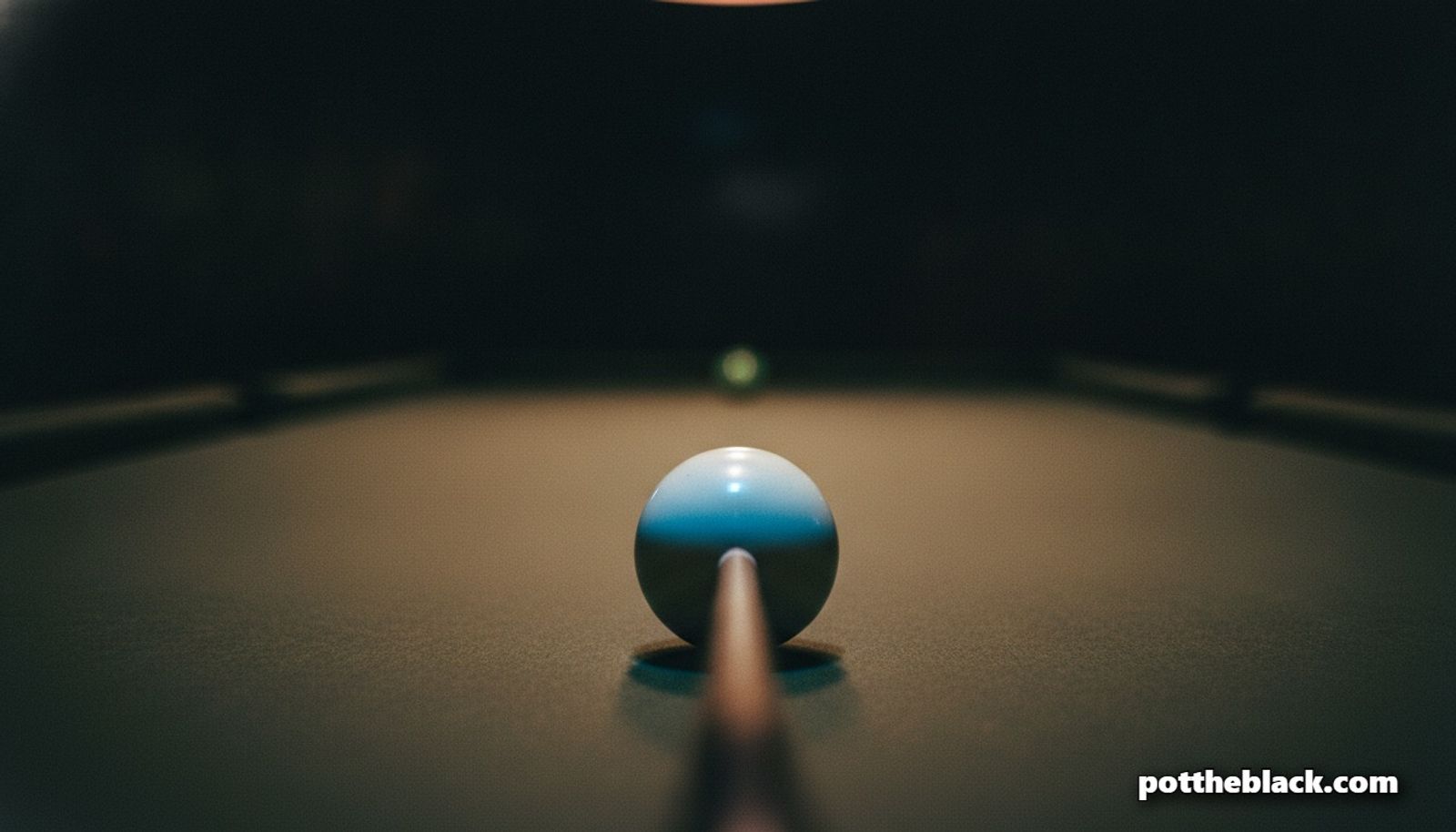
Place the cue ball on the head spot and try to hit a full-length table shot with maximum bottom-right spin.
Don't re-chalk. Keep repeating the same shot and count how many attempts it takes before the cue clinks or slips off the ball.
With Master, you'll likely miscue by the third or fourth shot. With Taom V10, I've seen players get to fifteen or twenty attempts before it lets go. That gap is the real, physical difference in staying power, not marketing copy.
What it actually costs you per year
This is the bit that usually gets skipped, and it's the bit that actually matters if you're deciding whether to spend the extra money.
A gross of Master chalk costs roughly the same as one cube of Kamui or one cylinder of Taom. But Master needs re-applying every shot or two, so a single cube might get you through one session. Taom, by contrast, can last six months to a year of regular club play off a single $30 piece.
Run the actual numbers over a year of weekly play and Taom often works out cheaper per session than constantly rebuying Master, even though the upfront price looks steep. It's the same logic as buying a good pair of boots instead of three cheap pairs — the sticker price lies about the real cost.
Rob's verdict: what should you actually buy
If you're just starting out, or you're playing for fun on a Friday night at the pub, stick with Master. It's the baseline for a reason, it's cheap enough that losing a cube doesn't sting, and using it properly will teach you the habit of chalking before every shot — a pre-shot routine that matters a lot more to your game long-term than the brand of chalk in your pocket.
If you're playing regularly at club or interclub level and you're tired of watching shots kick off the cue ball at the worst possible moment, Kamui Roku is the middle ground. Real grip, less mess than the old formula, and a price that sits between the other two.
If you're playing for money, chasing a competitive edge, or you're just sick of wiping the cue ball down every twenty minutes, go for the Taom V10. Thirty dollars for a piece that lasts most of a year and stops your object ball kicking off-line on a crucial shot is one of the cheapest genuine upgrades in the game.
Just do yourself a favour and keep it away from the edge of the rail. Pub floors aren't as clean as they look, and you don't want to be the bloke on his knees mid-frame trying to find a thirty dollar cylinder that rolled under the jukebox.
Cheers,
Rob
| The Gear | Best Use Case | Investment | D1 Standing | Direct Link |
|---|---|---|---|---|
| Taom V10 (Green) | Tournament Play | $$$ | ★★★★★ | Check Price |
| Kamui Roku | High Spin/Action | $$$ | ★★★★☆ | Check Price |
| Master Blue | Club Practice | $ | ★★★☆☆ | Check Price |
Pot the Black Verdict: Rob's Call
✓ Why it makes the cut:
- Taom V10 is the only chalk I trust for zero-kick play.
- Roku gives you that extra "grab" when you're under the pump.
- Saves the table cloth from looking like a tip.
✗ The honest trade-offs:
- Pricey if you have a habit of leaving gear at the pub.
- Master is dusty as, but it's what most house tables expect.
- Premium chalk requires a clean, scuffed tip to work properly.