Cue Tip Hardness: A Player's Guide
Our Rating
9.5/10
The Specs
Details coming soon
If you’re strolling into the local pool hall, pumping coins into the table, and using whatever cracked, mushroomed cue is leaning against the wall, then you are already losing.
Your cue tip is the absolute heart of your gear. It’s the only bit of kit that actually touches the cue ball, meaning every ounce of spin, speed, and accuracy you generate depends entirely on that tiny piece of leather.
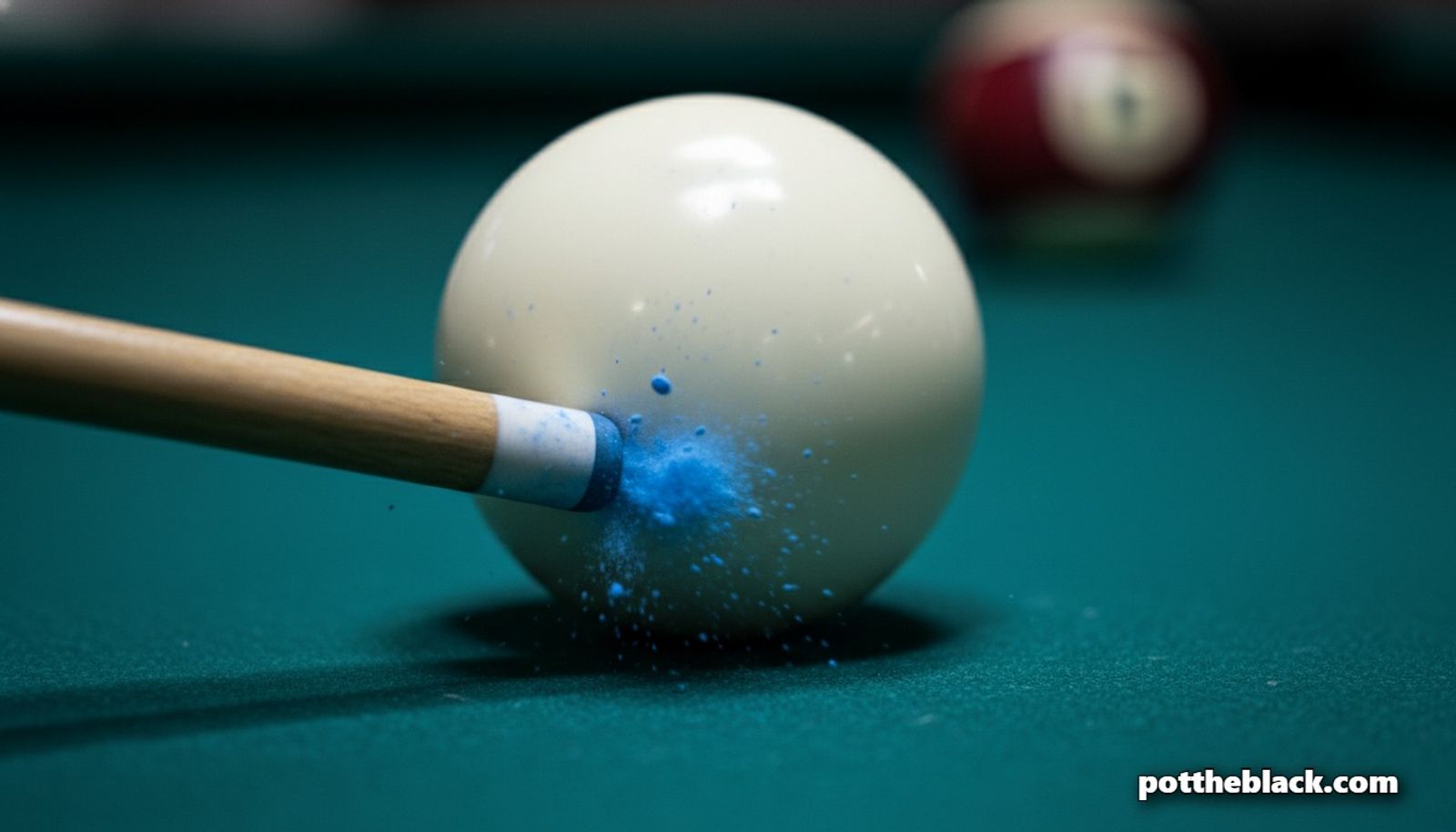
If you are like me, you may have not even realized that pool cue tips were made out of leather, I didn’t until I really started researching different type of tips. Most standard playing cues are made from pigskin or water buffalo hide and come in two styles:
- Layered (Laminated) Leather: Made by stacking and gluing six to ten thin sheets of leather together. Brands like Kamui and Tiger use this modern method because it creates highly consistent density, prevents the tip from flattening out over time, and extends its lifespan.
- Solid (Single-Piece) Leather: Punched directly out of a single piece of thick hide. Traditional choices like Le Pro or Triangle are inexpensive and favored by classic players, though they can wear down or deform ("mushroom") faster than layered tips.
When you walk up to the counter or browse a proper billiards site, and you’ll be staring at a minefield of options: soft, medium, hard, layered, single-layer, phenolic—it’s enough to make your head spin before you’ve even lined up a shot.
Let's break down the physics of tip hardness versus cue ball control, look at how to maintain your edge, and figure out exactly what density should be sitting on the end of your stick.
The Physics: Compression, Dwell Time, and English
To understand control, you have to understand what happens at the exact millisecond your cue strikes the white. This comes down to a concept called dwell time—that little window where the leather is squashed against the cue ball.
Soft Tips and High Elasticity
A soft leather tip acts like a sponge. When you strike the ball, the leather compresses significantly, flattening out and staying in contact with the ball for a microsecond longer than a hard tip would. Because it "grips" the ball across a slightly wider surface area during that split second, it passes on spin—or English—with incredible ease. You don't have to hit the ball as far from the center to get it dancing across the baize.
But there is a major catch: consistency. Because soft tips compress so much, they change shape rapidly. They are highly prone to "mushrooming"—where the sides bulge out past the ferrule—and they require constant trimming and scuffing to keep a true dome.
Hard Tips and Raw Energy Transfer
On the other side of the ledger, hard tips compress barely at all. The contact is crisp, sudden, and violent. Instead of absorbing energy through compression, a hard tip transfers almost 100% of your stroke's kinetic power directly into the ball. This makes them incredibly accurate for straight, high-speed potting because there is no elastic deformation to throw the ball off line.
The downside? If your cue action isn't absolutely spot-on when you attempt to apply heavy sidespin, a hard tip will slide right off the cue ball, resulting in a disastrous miscue.
The Lineup: Which Tip Fits Your Game?
No single tip rules the table. The right density depends entirely on your discipline, your stroke mechanics, and how much maintenance you're willing to do at the kitchen table.
1. Soft Tips: The Spin Doctors
- Best For: Creative 9-ball players, finesse shooters, and small-ball English 8-ball players who love floating shots in with deep screw and heavy side.
- Popular Examples: Elkmaster, Kamui Black Soft, Century Pro G1 or G2.
- The Vibe: Incredible feel and feedback. It gives you a plush, dampened hit that lets you cheat the pockets with extreme spin. But be prepared to keep a tip shaper in your pocket, because they flatten out fast under heavy work.
2. Medium Tips: The All-Rounders
- Best For: The everyday league player, traditional 8-ball players, and anyone who wants a reliable balance between potting accuracy and position play.
- Popular Examples: Kamui Medium, Century Pro G3.
- The Vibe: This is the sweet spot for most players. It holds its shape beautifully over weeks of heavy hitting but still has enough grip to let you drag the cue ball back three rails when needed. It’s predictable, low-maintenance, and highly forgiving.
3. Hard and Phenolic Tips: The Powerhouses
- Best For: Break cues, jump sticks, and dedicated snooker players who play on pristine cloth where potting precision is everything.
- Popular Examples: Tiger Hard, Kamui Hard, Phenolic resin composites.
- The Vibe: If you try to break with a soft tip, you’re robbing yourself of massive power because the leather absorbs the blow. A hard tip or a synthetic phenolic tip delivers maximum energy for an explosive break. For snooker, a firmer tip ensures that long distance pots hit the back of the pocket dead center, provided your delivery is straight.
Tip Hacks: Burnishing and Domining
Even the most expensive piece of leather is useless if it looks like a fuzzy marshmallow. If you want your tip to perform like a pro's, you need to master two basic maintenance skills: shaping the radius and burnishing the walls.
The Radius: Dime vs. Nickel
The curvature of your tip determines how efficiently you can apply spin.
- Dime Radius: A tighter, sharper curve (matching the arc of a small coin). This concentrates the pressure on a smaller point of the cue ball, allowing for extreme English with minimal offset. Great for smaller pool shafts (11.5mm to 12.5mm) and high-finesse games.
- Nickel Radius: A flatter, gentler curve. This provides a larger sweet spot in the center, maximizing surface contact on straight shots and significantly reducing accidental spin. It’s the standard choice for break cues and heavy-hitting 8-ball setups.
The Burnish: Locking the Sidewalls
When a new tip is trimmed down flush with the ferrule, the leather edges are left open, porous, and fibrous. If you leave them like that, the tip will mushroom out after a single session under the pump.
To lock those fibers in place, you must burnish them:
- Dampen the side of the leather tip with a tiny drop of water or burnishing wax. Do not get moisture on the face or the ferrule.
- Take a thick strip of leather, a heavy piece of cardboard, or even a crisp dollar bill and wrap it tightly around the side of the tip.
- Rub it back and forth with intense speed and pressure.
The friction generates intense heat, causing the leather fibers to compact, seal, and harden. When you’re done, the sides should have a dark, glass-smooth, professional shine that completely prevents the tip from expanding sideways.
Tip Hardness vs. Control
A quick reference guide to matching your playing style with the right leather density.
| Player Type | Recommended Hardness | Main Focus | Maintenance Level | Action |
|---|---|---|---|---|
| The Finesse / Spin Player | Soft | Maximum cue ball deflection and spin control. | High—requires frequent scuffing and reshaping. | View Tips |
| The Weekly League Competitor | Medium | Balance of position play and reliable potting accuracy. | Medium—holds shape well, needs occasional burnishing. | View Tips |
| The Straight Potter / Snooker Fan | Hard | Absolute center-ball precision and crisp power transfer. | Low—rarely deforms, but requires precise cueing. | View Tips |
| The Heavy Breaker | Extra Hard / Phenolic | Maximum kinetic energy transfer without tip deformation. | Extremely low—built for raw, brutal impact. | View Tips |