Why the Snooker Miss Rule is Killing the Club Game
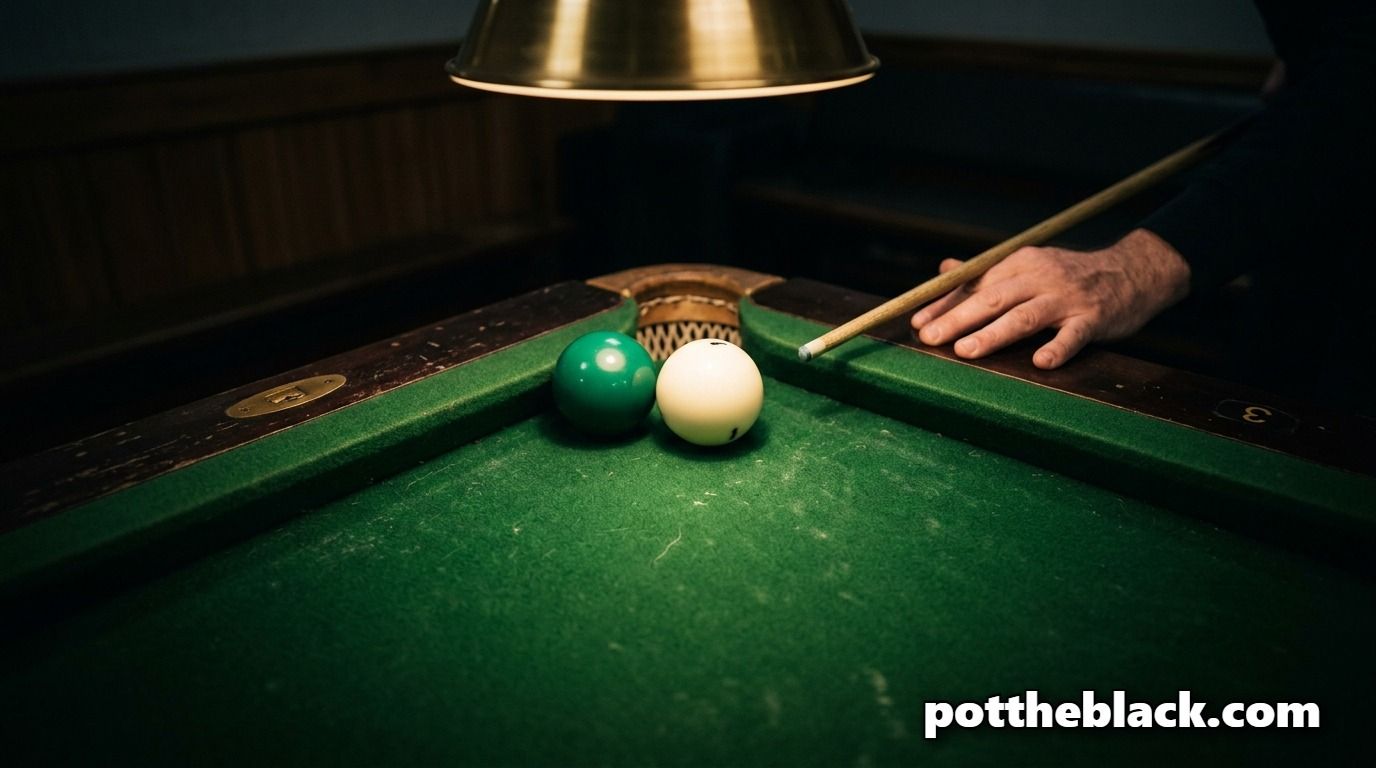
Here’s the thing: we all love watching the Masters or the World Champs at the Crucible. We see the ref move the balls back with surgical precision after a miss, and we think, "Yeah, that’s how the game should be played." But here’s the reality—you aren’t Ronnie O'Sullivan, and your mate Dave definitely isn't a qualified WPBSA referee.
The Miss Rule (officially Rule 14 in the snooker handbook) is there to make sure a player doesn’t just "give up" on a hard snooker. If the ref thinks you didn't try your best to hit the ball, they call a "Miss," give your opponent the points, and your opponent can make you play the shot again from the original spot.
In theory, it’s about integrity. In practice, at your local club, it’s a total mess. Here is why we need to bin it for amateur play.
1. The "No Hawkeye" Problem
Professionals have overhead cameras and a digital "marker" on a screen to reset balls to the millimetre. When the ref moves a ball back, it goes exactly where it was. Amateurs are just guessing. You end up with a ball that’s half an inch to the left, which suddenly makes the escape ten times easier—or impossible. Without the tech, you’re just playing a different game every time you reset.
2. The Absence of a Third Party
The rule requires an impartial referee to judge "intent." This is the big one. In amateur games, the "ref" is usually the bloke you’re playing against. Talk about a conflict of interest! If you’re playing for a pint, is your mate really going to be fair when judging if you "tried your best"? It creates an immediate argument that sours the whole vibe of the night.

3. Table Time & Lighting
Pro tables are perfectly level with brand-new cloth that’s ironed daily. Most club tables have seen better days. They might have a slight "roll," a damp patch from a spilled drink three years ago, or a bit of a dip near the pockets. These imperfections mean a complex three-cushion escape might be physically impossible to repeat exactly. If the ball doesn't take the same line twice, how can you penalise the player?
4. The "Three-Hour Frame" Trap
We’ve all been there. A difficult snooker results in ten misses in a row. Pros have the touch to eventually find the edge of the ball. Amateurs can get stuck in an infinite loop. I’ve seen frames at the local club last over an hour because of one snooker. It kills the fun, kills the flow, and honestly, the bar is going to close before you finish the frame.
5. Mental Fatigue
The rule is designed to test professional stamina. For a hobbyist who’s been working 40 hours a week and just wants a bit of a run on the baize, being forced to play the same impossible shot five times in a row isn't a test of skill—it’s just frustrating. When players get frustrated, they stop playing properly, and the standard of the game drops through the floor.
6. The "Snookers Required" Math
Here’s a bit of "Dad wisdom" for the younger ones: the Miss Rule actually changes once someone needs snookers to win. Pros know the rulebook inside out and stop calling the Miss when the points on the table don't add up. Amateurs often try to call a "Miss" when the score already requires penalty points, which is actually against the official rules. It just proves most people don't actually know the rule they're trying to enforce.
7. The Skill Gap Reality
A "best effort" for a pro looks like a near-miss. A "best effort" for a bloke who plays once a week might be missing the ball by a foot because he hasn't accounted for the side-spin correctly. You shouldn't be penalised for not being a world-class athlete. If you tried, you tried. Move on.
8. Risk of "Table Tampering"
Every time an amateur reaches over the table to move balls back, they risk bumping other balls with their sleeve or getting chalk dust on the cloth. I’ve seen more fouls committed while trying to reset the balls than were committed during the actual play. It’s a recipe for disaster.
9. Social Etiquette
Snooker is a gentleman's game, or at least it's supposed to be. In a club environment, calling a "Miss" is often seen as "sharking"—trying to tilt your opponent or get under their skin—rather than fair play. If you want to keep your mates, don't be that guy who calls a Miss on a Wednesday night.
10. The Free Ball Alternative
Amateur rules already have a built-in solution that works perfectly: the Free Ball. If a player fouls and leaves their opponent snookered, the opponent gets a free ball. This punishes the player who fouled without the nightmare of trying to recreate the table layout. It’s clean, it’s fast, and it keeps the game moving.
Comparison: Pro vs. Amateur "Miss Rule"
Final Thoughts from the Baize
At the end of the day, we play snooker and pool because we love the game. We love the sound of a clean pot and the challenge of a tactical battle. But we aren't playing for thousands of pounds under TV lights.
If you're in a league or a proper sanctioned tournament, then sure, follow the book to the letter. But for everyone else? Be a straight shooter. If someone misses a snooker, take the points, take the free ball if it's there, and keep playing. Don't let a rule designed for the top 0.1% of players ruin a perfectly good night out at the club.
Good onya for reading. Now, go out there, hit 'em straight, and for God's sake, don't call a Miss on your father-in-law. It’s not worth the quiet ride home.
Cheers, Rob
Think I’m wrong? Do you reckon the Miss Rule keeps the game honest even for us hackers? Drop a comment below and let’s have it out.
More from the Table
Cue Sports Weekly - Wu Yize Wins Shenzhen, O'Sullivan Gets His Lifeline, and the Race for York Tightens
Cue Sports Weekly - Brennan Takes the 8-Ball Worlds, Shenzhen Open Hits the Last Eight