The Foundation of 8-Ball: A Guide to Stance, Grip, and a Straight Stroke
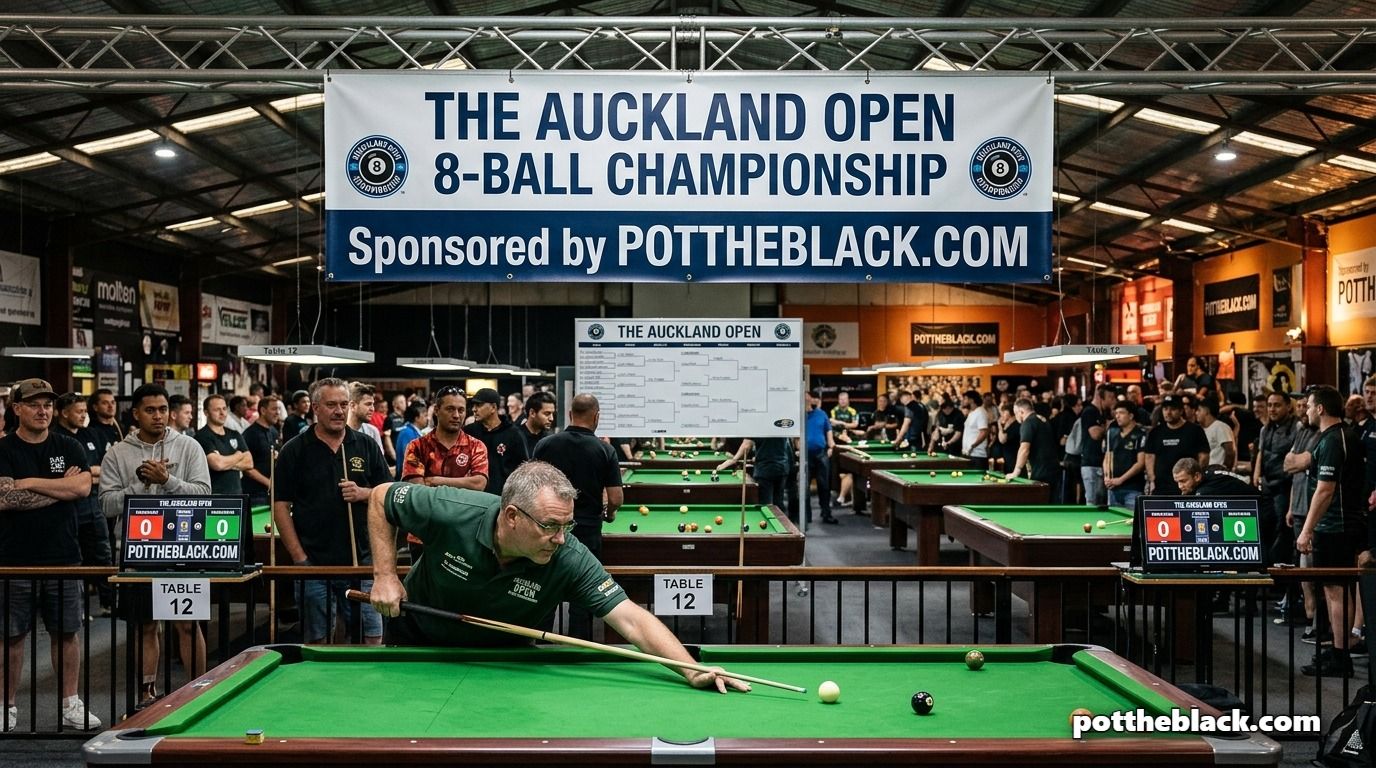
I’ve spent a lot of nights at the Papatoetoe RSA, and if there’s one thing that separates the weekend warriors from the guys and girls who actually collect the prize money, it’s the foundation.
Most people walk up to a table and just "lean over." That’s fine if you’re just having a social pint, but if you want to be a straight shooter, you need a stance that feels like it’s built out of concrete.
If your base is wobbly, your tip won’t go where you’re looking. It’s basic physics.
Here is how you actually set yourself up for a shot.
1. The Approach: Don't Just Lean, Step In
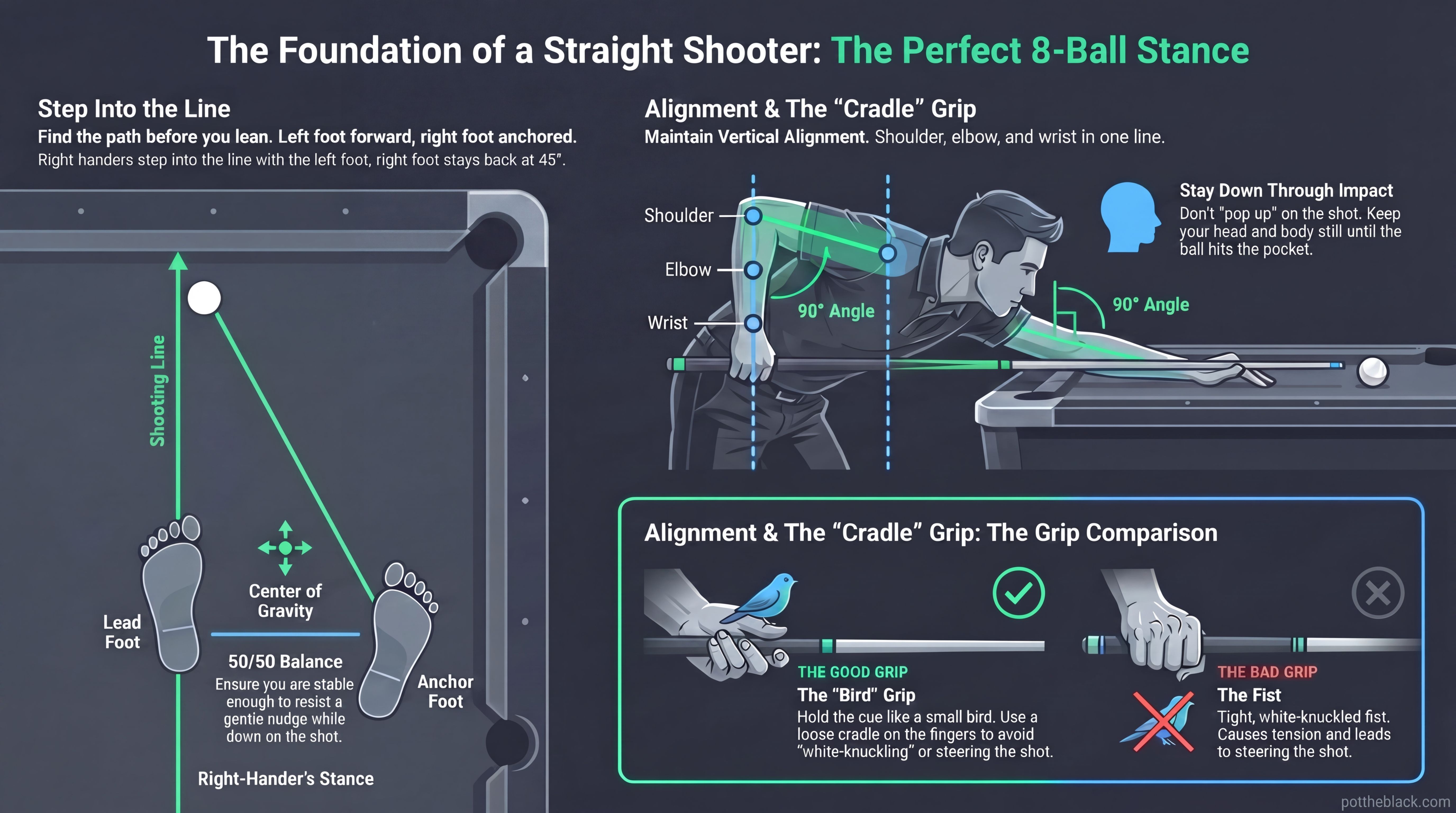
Everything starts before you even touch the baize. You need to align your "shooting line"—that’s the straight path from the pocket through the object ball to your cue ball.
- Find the line: Stand behind the cue ball, facing the shot.
- The Lead Foot: For right-handers, your left foot steps forward and slightly to the left. Your right foot (your "anchor") stays back, usually turned out at about a 45 degree angle.
- Balance: You want your weight distributed about 50/50 or maybe 60/40 on the front foot. You shouldn't feel like you’re about to fall over if someone gave you a gentle nudge.
2. The Grip: Hold it Like a Bird
This is the biggest mistake I see. Most guys grab the cue like they’re trying to choke a snake. If you white-knuckle the wrap, you’re going to "steer" the cue and miss the pot.
- The "Cradle": Your hand should be a cradle, not a fist. The cue should rest on the pads of your fingers.
- The Pressure: Hold it just tight enough so it doesn't slide out of your hand. Think of it like holding a small bird—tight enough so it won't fly away, but soft enough that you don't hurt it.
- The Back Arm: When you're down on the shot, your forearm should be vertical. At the point of impact, your arm should form a 90 degree angle. If your hand is too far forward or back, your tip will dip or lift.
3. The Bridge: Your Aiming Guide
Whether you use an open bridge or a closed loop, it needs to be solid. If your hand moves, the shot is gone.
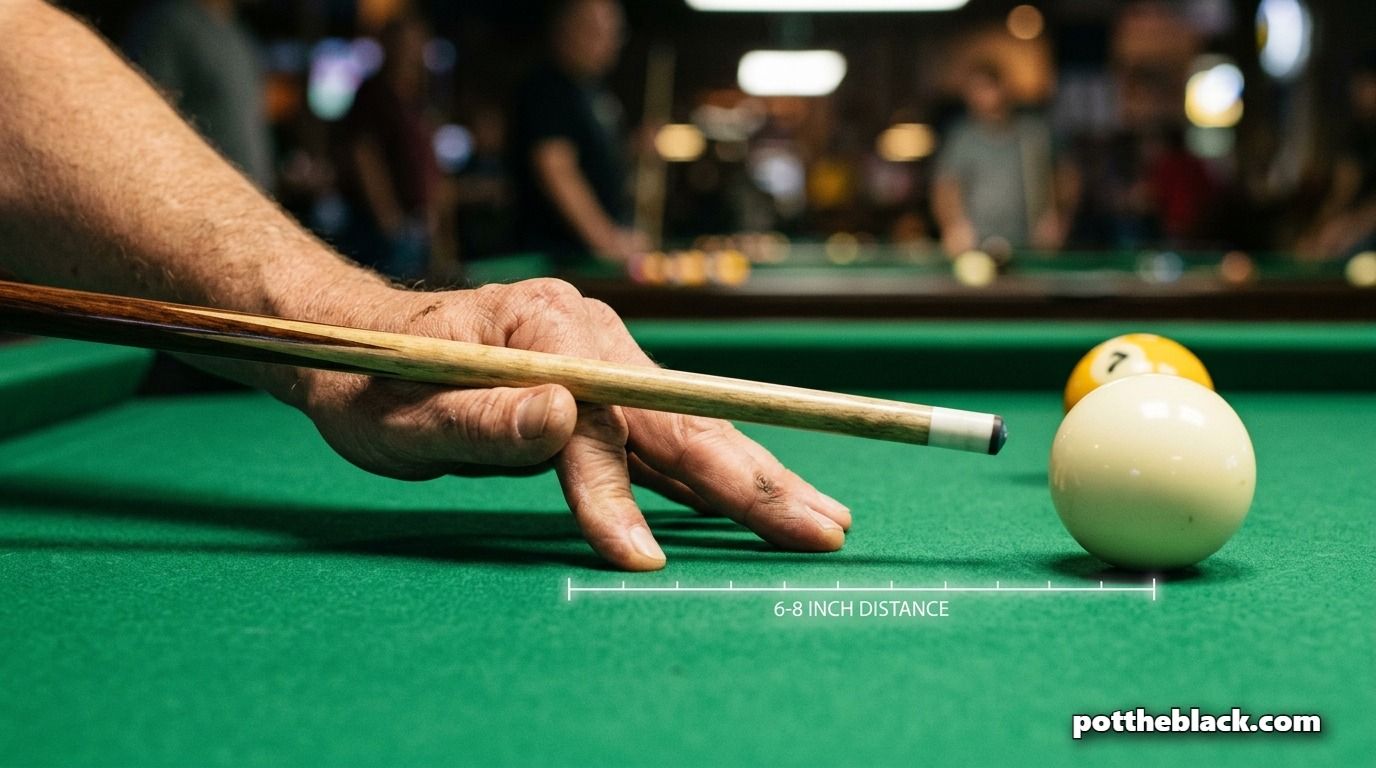
- Solid Contact: Spread your fingers wide on the cloth. Press down.
- Distance: Keep your bridge hand about 6 to 8 inches from the cue ball. Too close and you don't have room for a follow-through; too far and you lose control.
Common Issues (And How to Fix Them)
Even the seasoned vets get "the wobbles" sometimes. Here’s what usually goes wrong:
Dropping the Elbow: If you drop your elbow before you hit the ball, you’re going to jump the cue ball or add unintentional English. Keep that elbow still until after the ball is gone.
Chicken Winging: If your elbow is sticking out to the side, your cue isn't straight. Use a mirror to make sure your shoulder, elbow, and wrist are all in one vertical line.
The "Pop Up": You ever see someone jump up the second they hit the black? They usually miss. Stay down until the ball hits the pocket.
Practice Drills: The "Bottle" and the "Rail"
You don't need a fancy coach to fix this. You just need a bit of discipline.
The Beer Bottle Drill
Take an empty longneck bottle. Put it on its side on the table. Stand in your proper stance and stroke your cue in and out of the neck of the bottle without touching the glass.
If you clink the glass, your stroke isn't straight. Do this 50 times. It's boring, but it works.
The Long Rail Stroke
Place the cue ball on the head spot. Aim straight down the long rail to the opposite cushion. Hit the ball with a dead-center strike. The goal is for the ball to come back and hit your cue tip. If it comes back to the left or right, you're "side-swiping" the ball.
Tools to Help You Level Up
Sometimes a bit of gear can speed up the learning process. Here’s a look at what actually helps vs. what’s just fluff.
At the end of the day, there are no shortcuts. You can buy the flashiest cue in the world, but if your feet are in the wrong place and your grip is too tight, you’re just a guy with an expensive stick. Get the basics right, stay down on your shots, and the pots will start falling.
Cheers, mate. See you on the baize.
More from the Table
Cue Sports Weekly - Wu Yize Wins Shenzhen, O'Sullivan Gets His Lifeline, and the Race for York Tightens
Cue Sports Weekly - Brennan Takes the 8-Ball Worlds, Shenzhen Open Hits the Last Eight