The Art of the Soft Break: Why Control Beats Power in 8-Ball
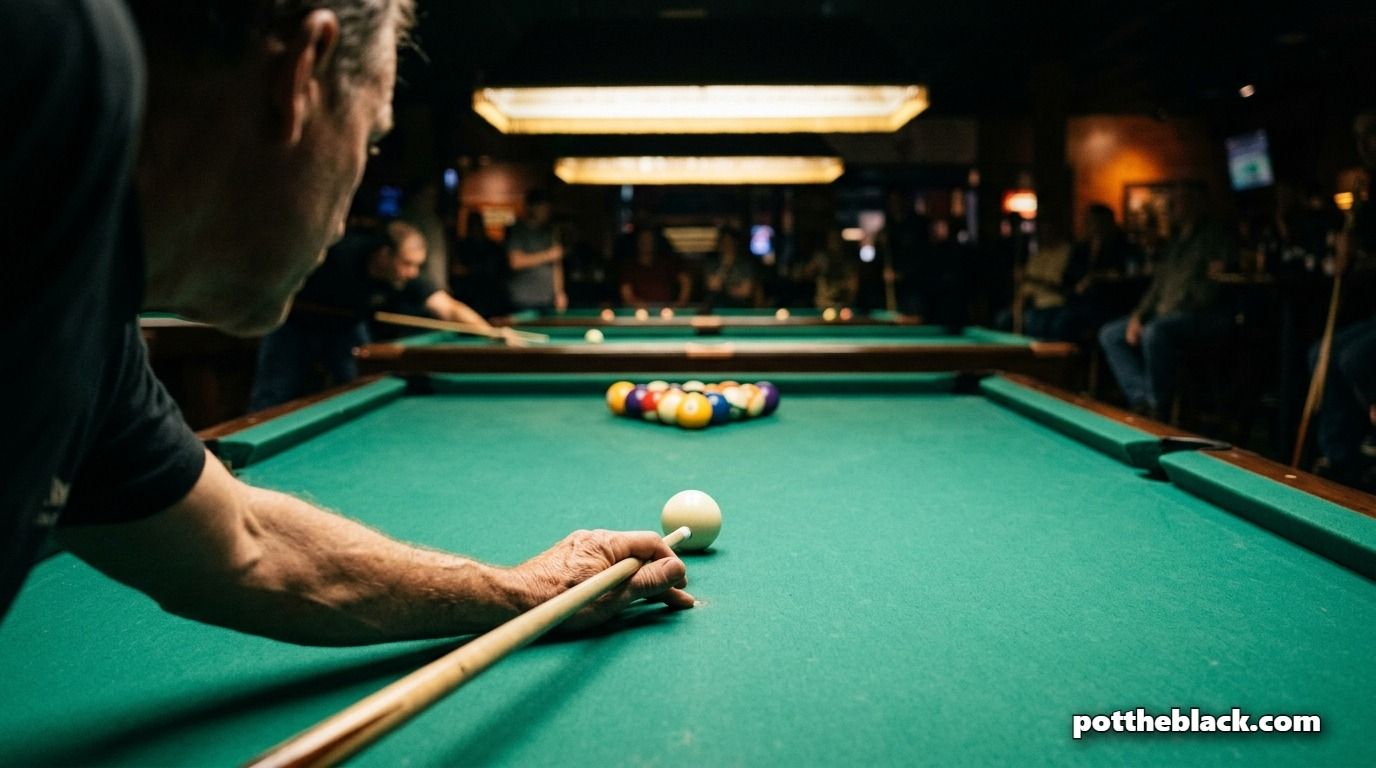
I’ve spent three decades leaning over the green baize of tables from the Papatoetoe RSA to national tournament floors, and if there’s one thing I’ve learned, it’s that the break is the most misunderstood shot in the game.
Most blokes walk up to the table, chalk their cue like they’re trying to sharpen a spear, and then swing at the rack with everything they’ve got. They think that if they hit it hard enough, the balls will magically find the pockets.
That’s what we call "hope pool." And hope isn’t a strategy when the money’s on the table.
In modern 8-ball, especially on the smaller 7-foot tables common in New Zealand and Australia, the "Soft Break" (or controlled break) is the secret weapon of the seasoned vet. Here’s why control beats raw power every single time, and how you can master it.
The Physics of the Break: Scattering vs. Controlled Chaos
When you smash into a rack at 30 miles per hour, you lose control of the most important ball on the table: the cue ball. A high-speed collision sends the cue ball flying off the pack, often kicking around three or four cushions or, worse, flying off the table entirely.
The soft break isn’t about hitting the balls gently; it’s about hitting them with the maximum amount of transferred energy while keeping the cue ball in the middle of the table.
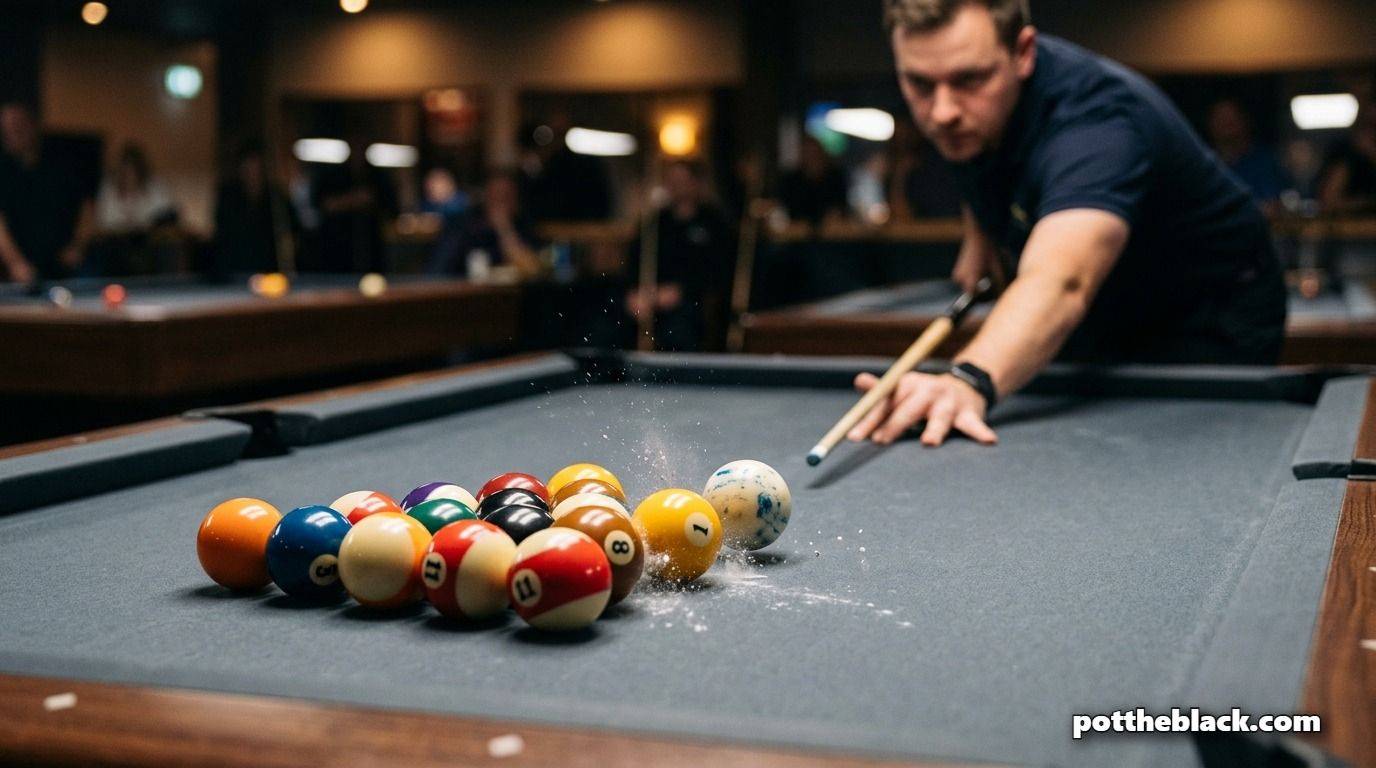
Don't whack the ball too hard, or accidentally over chalk the cue tip
Why the Soft Break Works
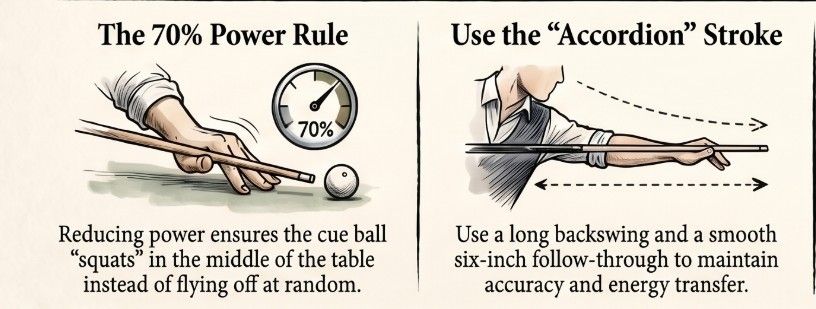
Cue Ball Control: By reducing your power to about 60-70%, you can ensure the cue ball hits the lead ball and "squats" right in the center of the table.
Predictable Spreads: Instead of balls flying everywhere at random, a controlled break tends to nudge the balls into clusters that are easier to manage.
The "Eight on the Break": In many rule sets, potting the 8 on the break is a win. A controlled hit on the second ball or a square hit on the lead ball increases the chances of the 8 moving toward a side pocket rather than getting buried in the mess.
Step 1: The Setup and Stance
You can’t have a controlled break if your feet are all over the place. For a break shot, I like to widen my stance just a touch more than a standard shot. It gives you a lower center of gravity.
- The Bridge: Use a closed bridge (loop bridge). You need the stability because even at 70% power, there’s enough force to make the cue want to wander.
- The Aim Point: Most players aim for the head ball (the one at the front of the triangle). For a soft break, try moving your cue ball about two inches off-center on the "kitchen" line. Aim to hit the head ball slightly off-center, or aim for the "second-row" ball if you're playing certain 8-ball variants.
Step 2: The Stroke - The "Accordion" Method
Here’s the "Pool Hack" for power: it doesn't come from your shoulder. It comes from a long, smooth follow-through.
I tell the young fellas to think of their arm like an accordion. You want a long backswing, a smooth acceleration, and—most importantly—a follow-through that finishes six inches past where the cue ball started. If you "jab" at the ball, you’ll lose accuracy.
- The Grip: Keep it loose! If you squeeze the cue during the break, you’ll pull the shot. Let the weight of the cue do the work.
- The Height: Hit the cue ball just slightly below center. This helps the cue ball "stop" or "draw" back slightly after impact, preventing it from following the pack into a pocket.
Step 3: Mapping the Result
Once the balls have stopped moving, the break isn't over. You need to "map" the table immediately.
Here’s what I look for:
The Key Ball: Is there one ball that opens up a clear path to the black?
The Clusters: Are there two balls touching? If so, your first goal shouldn't be to pot them, but to figure out which ball you can use to "break" them later in the frame.
The "Insurance" Ball: Find a ball near a pocket that is a "hanger." Save that ball. Don't take it early. You’ll need it to get position on the black later.
Practice Drill: The "Center Square" Challenge
Next time you’re at the club, try this. Rack the balls normally. Your goal isn't to pot a ball on the break. Your goal is to break the rack and have the cue ball come to rest inside the "center square" of the table (the area between the four middle diamonds).
Do this 20 times. If the cue ball hits a cushion, you’ve hit it too hard or with the wrong spin. Once you can park that white ball in the center 15 out of 20 times, you’ll find that winning frames becomes a whole lot easier.
Expert Gear Tip: Does the Tip Matter?
I see guys buying "Break Cues" with phenolic (plastic) tips. Those are great for raw power, but for a soft, controlled break, I actually prefer a hard leather tip. It gives you more "feel." If you're playing with your playing cue, just make sure your chalk is fresh. A miscue on the break is the easiest way to look like a novice in front of the regulars.
Summary: Control is King
At the end of the day, 8-ball is a game of patterns, not a game of strength. The soft break is the first move in a chess match. You aren't trying to blow the opponent away with a loud noise; you're trying to set the table so that they never get a second look at it.
Practice the control. Park the white. Map the table.
Cheers, mate. See you at the table.
More from the Table
Cue Sports Weekly - Wu Yize Wins Shenzhen, O'Sullivan Gets His Lifeline, and the Race for York Tightens
Cue Sports Weekly - Brennan Takes the 8-Ball Worlds, Shenzhen Open Hits the Last Eight