Taom V10 vs. Master vs. Kamui: The Ultimate Pool Chalk Comparison
I’ve spent a lot of time leaning over the cloth in clubs from Auckland to New Plymouth. In that time, I’ve seen players spend a fortune on a custom cue, only to use a piece of house chalk that’s been sitting in a puddle of spilled beer.
It makes no sense, mate.
Think of your chalk as the tyres on a racing car. You can have all the horsepower in the world, but if you don't have traction where the rubber meets the road—or the leather meets the cue ball—you’re going to spin out.
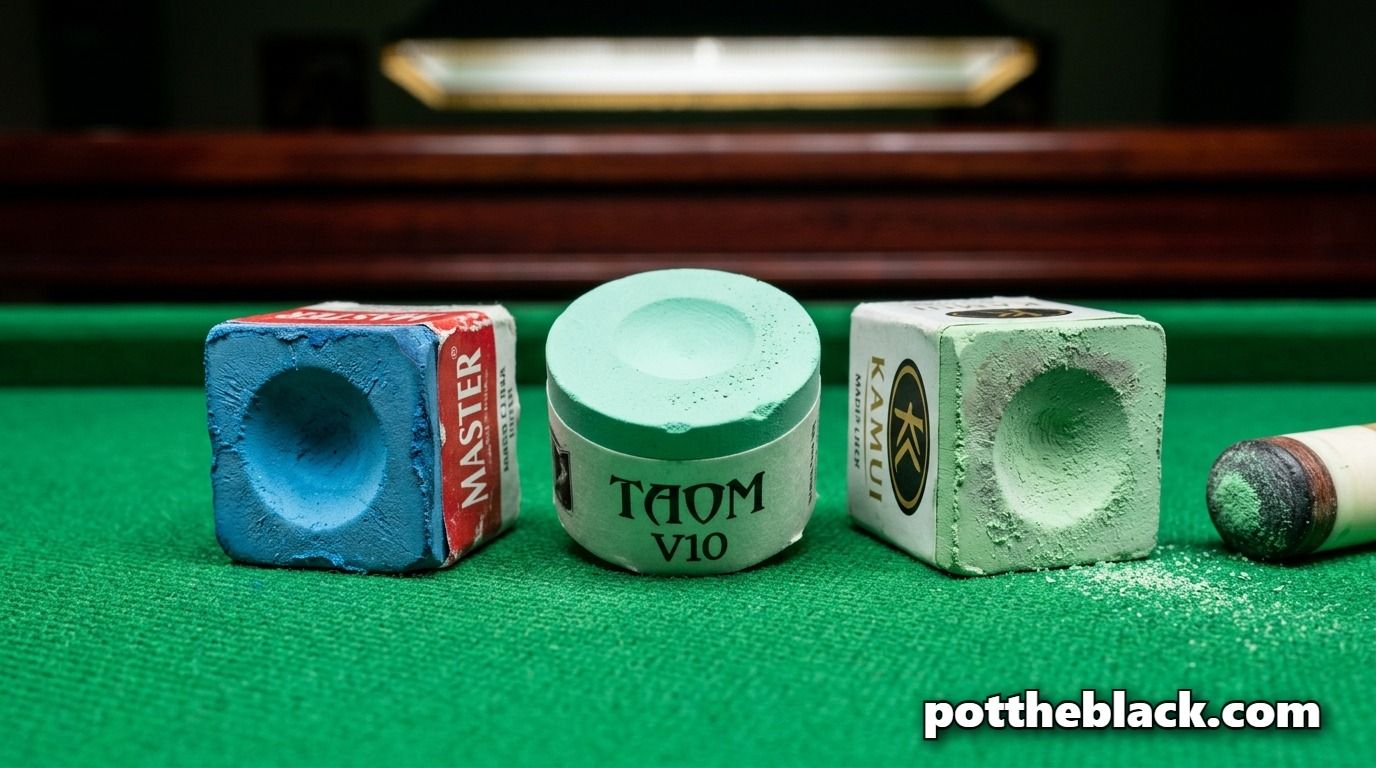
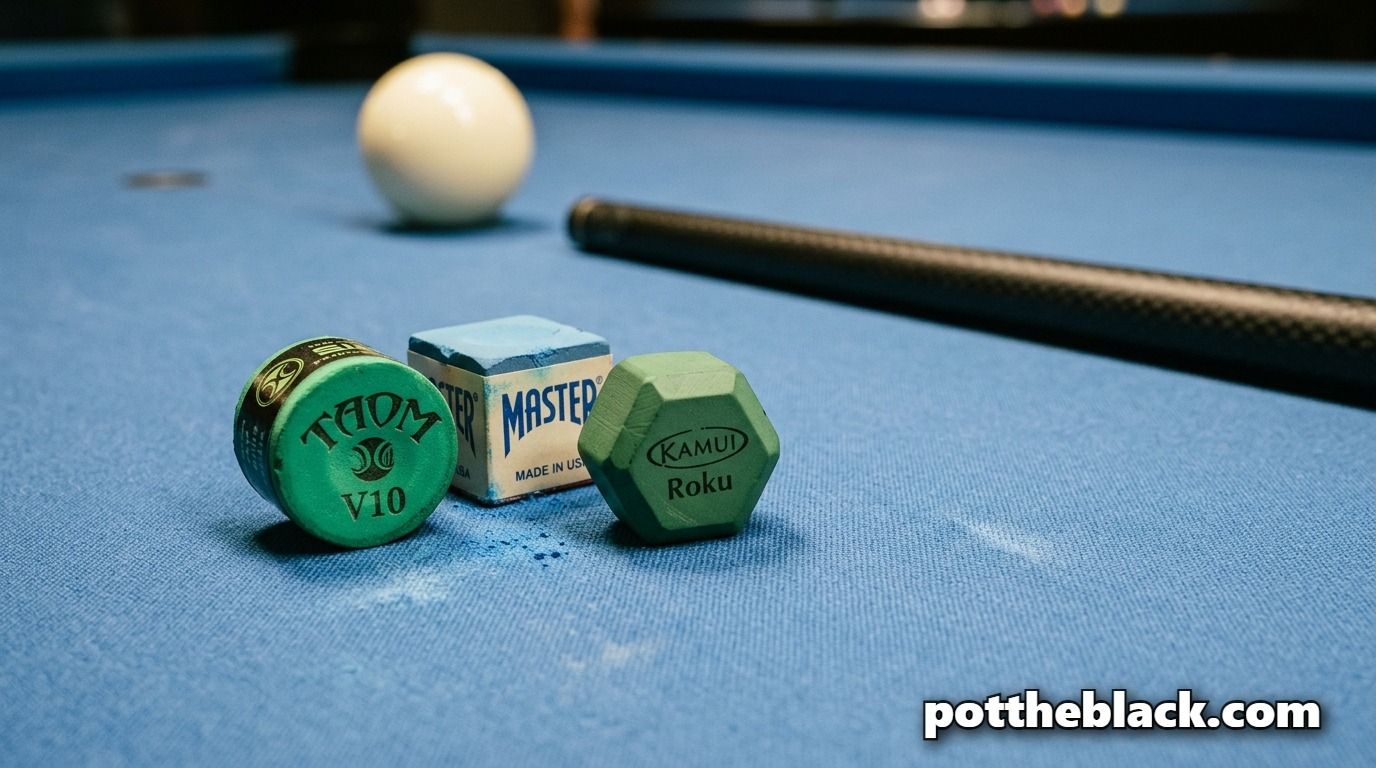
If you're looking to upgrade, you’re likely looking at three names: Master, Kamui, and Taom. One costs fifty cents, the others cost as much as a round of drinks. Let’s break down which one actually belongs in your cue case.
The Baseline: Master Chalk
Master is the "old faithful." It’s produced by Tweeten in Chicago, and it’s been the industry standard since your grandad was playing.
The Feel: It’s "dry." When you apply it, you get that classic dusty puff. It’s abrasive, which means it bites into the leather tip well.
Why it’s still around:
- Consistency: You know exactly what you’re getting. It provides great grip for about 1–2 shots before you need to re-apply.
- Price: You can buy a gross (144 cubes) for the price of one premium piece. If you lose your chalk at the club every week, this is your best bet.
The Downside: It’s messy. It gets on your hands, your bridge hand, and most importantly, it coats the cue ball. That blue dust causes "kicks" or "clings"—where the balls stick together for a split second upon impact, sending your object ball miles off-line.
Lets talk about chalk
The Grip King: Kamui (0.98 & Roku)
When Kamui hit the scene from Japan, it changed how we thought about "premium" gear. They treat chalk like high-end engineering.
The Feel:
Kamui 0.98 is "oily" or "creamy." It feels like putting lipstick on your cue. It’s incredibly tacky. Their newer Roku (the hexagonal one) is a bit drier but still stays on the tip like glue.
The Performance:
- Extreme Side: If you’re a player who loves to use three tips of English to zip the white ball around three cushions, Kamui gives you the most confidence. You won't miscue.
- Persistence: You can easily play an entire rack without re-chalking.
The Downside:
The "old" Kamui (.98 and 1.21) was notorious for being messy. It didn't just stay on the tip; it transferred to the cue ball in thick, waxy patches. The Roku version fixed a lot of this, but it’s still "grabbier" than Taom.
The Clean Freak: Taom V10
This is what I’m seeing in almost every comp lately. Taom is a Finnish company, and their V10 formula is currently the gold standard for serious competition.
The Feel: It feels hard. When you rub it on the tip, it doesn't look like much is happening. There’s no dust. None.
The Performance:
- Zero Kicks: This is the selling point. Because there’s no dust, the cue ball stays pristine. I’ve played 5-hour sessions with V10 where I didn't have to wipe the white ball once.
- Longevity: A single piece of V10 will last most blokes 6 to 12 months. Since you don't "drill" into it like Master, it wears down incredibly slowly.
The Downside: The shape. It’s a cylinder. If you set it on the rail and the table isn't perfectly level (or someone bumps it), it’ll roll right off and go skittering across the floor. At $30 a pop, you'll be diving under the table pretty quick to save it.
| The Gear | Best Use Case | Investment | D1 Standing | Direct Link |
|---|---|---|---|---|
| Taom V10 (Green) | Tournament Play | $$$ | ★★★★★ | Check Price |
| Kamui Roku | High Spin/Action | $$$ | ★★★★☆ | Check Price |
| Master Blue | Club Practice | $ | ★★★☆☆ | Check Price |
Pot the Black Verdict: Rob's Call
✓ Why it makes the cut:
- Taom V10 is the only chalk I trust for zero-kick play.
- Roku gives you that extra "grab" when you're under the pump.
- Saves the table cloth from looking like a tip.
✗ The honest trade-offs:
- Pricey if you have a habit of leaving gear at the pub.
- Master is dusty as, but it's what most house tables expect.
- Premium chalk requires a clean, scuffed tip to work properly.
Rob’s Technical Drill: The "Miscue Limit" Test
Don't take my word for it. Try this next time you're at the table to see if your chalk is up to snuff:
Clean your tip: Scuff it lightly so it’s not glazed over.
Chalk up once: Give it a good, even coat.
The Shot: Place the white ball on the head spot. Try to hit a full-length table shot with maximum bottom-right spin.
Repeat: Do not re-chalk. See how many times you can hit that high-spin shot before the cue "clinks" and slips off the ball.
With Master, you'll likely miscue by the 3rd or 4th shot. With Taom V10, I’ve seen blokes get to 15 or 20. That's the difference in "staying power."
The Verdict: What Should You Buy?
If you’re just starting out or playing for fun on a Friday night, stick with Master. It’s the baseline for a reason, and it’ll teach you the habit of chalking before every shot—a pre-shot routine is vital for your mental game.
But if you’re playing for money, or you're tired of losing frames because the balls "kicked" on a crucial black, go for the Taom V10.
Yes, $30 for a piece of chalk feels like a stir, but think about it this way: how much is a tournament entry fee? How much is a pint at the bar? In the grand scheme of things, thirty bucks for a year’s worth of "kick-free" pool is the cheapest advantage you can buy.
Just do me a favor—don't let the cylinder roll off the table. Those Auckland pub floors aren't as clean as they look.
Cheers,
Rob
Got a question about tip maintenance or why your break isn't spreading the balls? Hit me up in the comments or find me at the table.